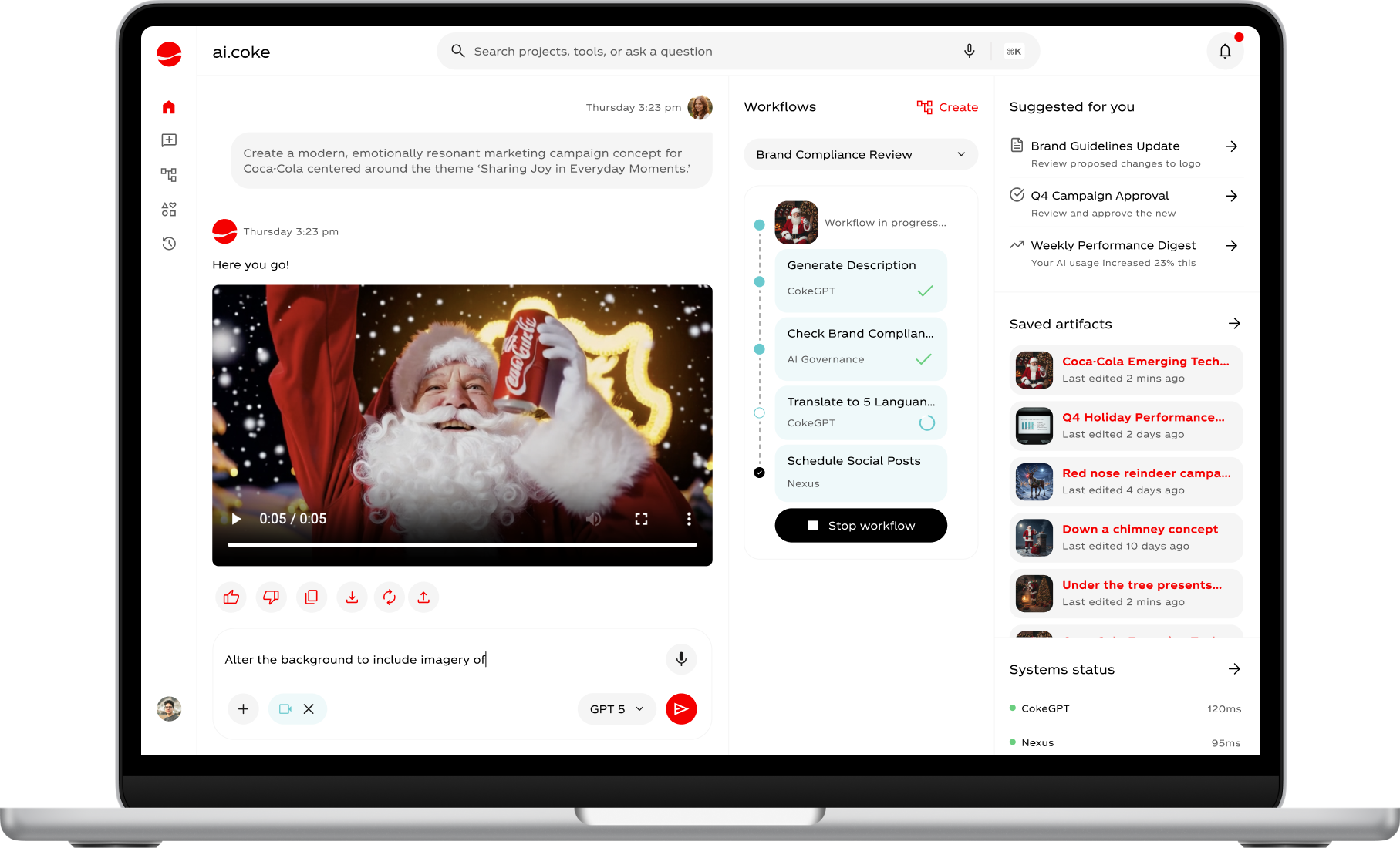

ai.cokeCoca-Cola had built CokeGPT, an internal AI assistant for roughly 90,000 employees across 200 countries. It worked. But it had no mobile experience, it didn't feel like Coke, and most employees weren't using it.
They asked us to make it better. Eight weeks later, we answered a much bigger question: what should the future of AI at Coke actually look like?
Product Design, Design System, Agentic UX/UI, AI Strategy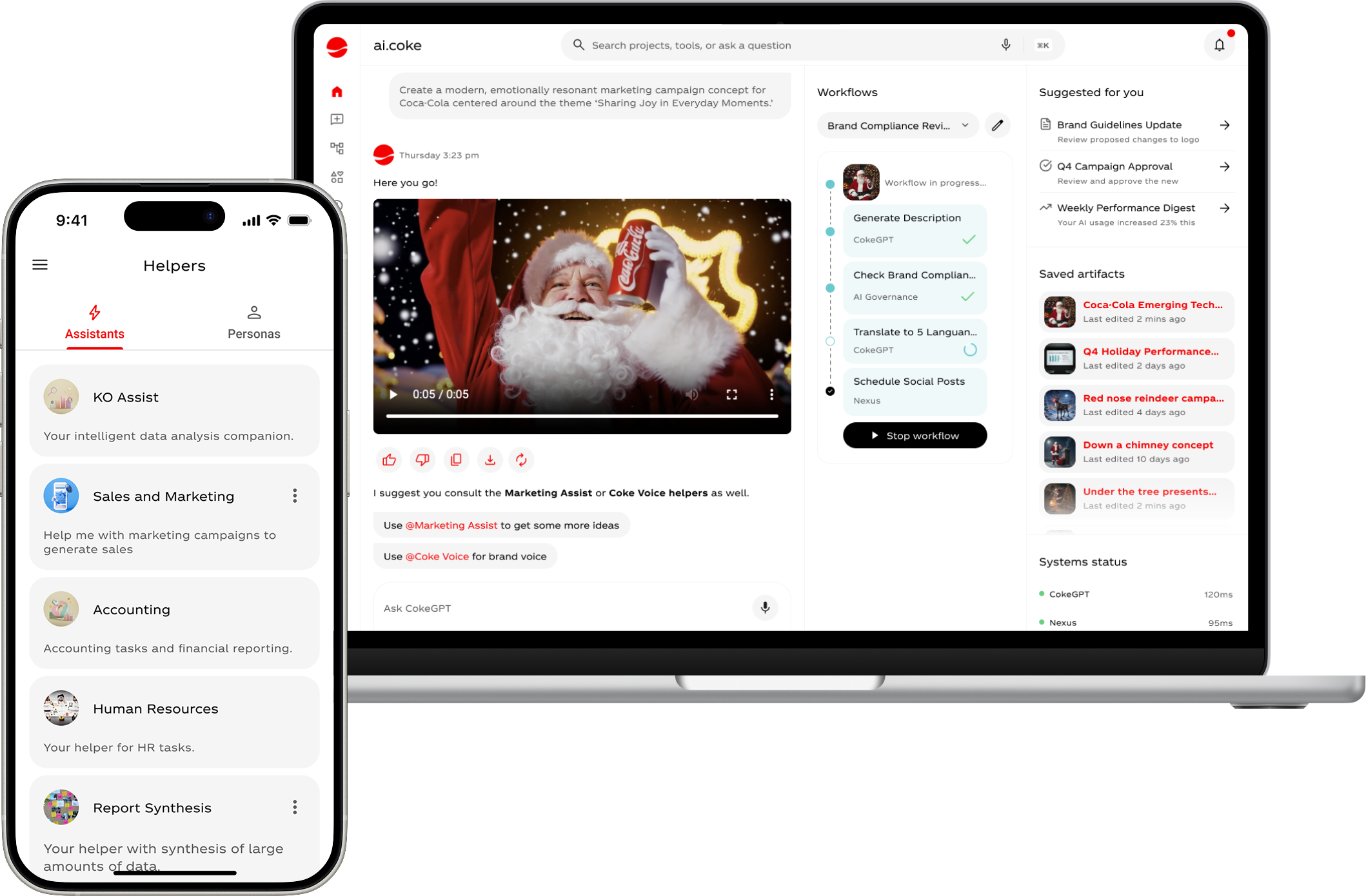
Discovery
Before touching the UI, we mapped how people actually used the product. A feature audit, journey mapping, and a success criteria workshop surfaced two things: the experience of the tool asked too much upfront, and nothing about it felt like it belonged to Coca-Cola.
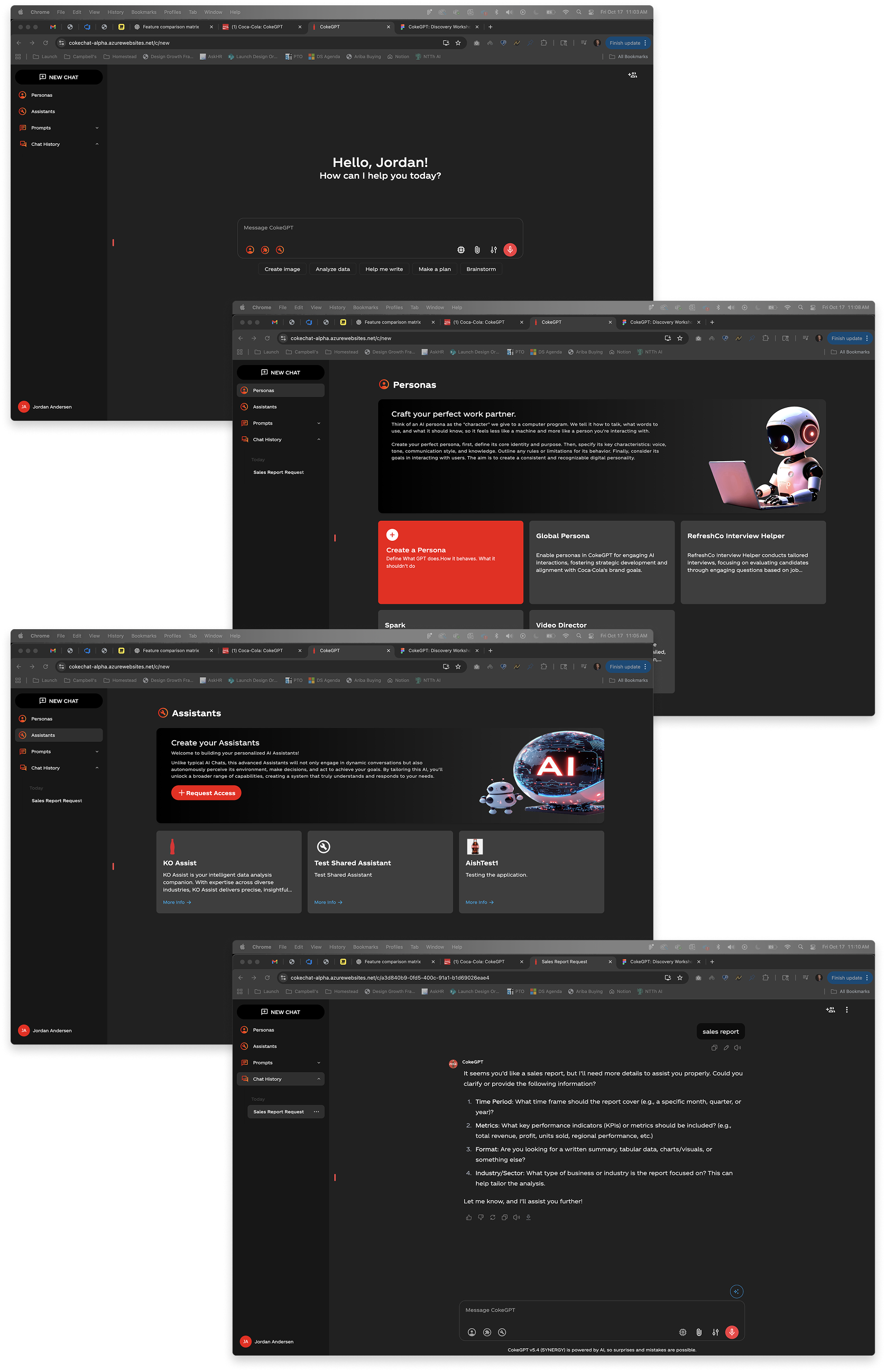
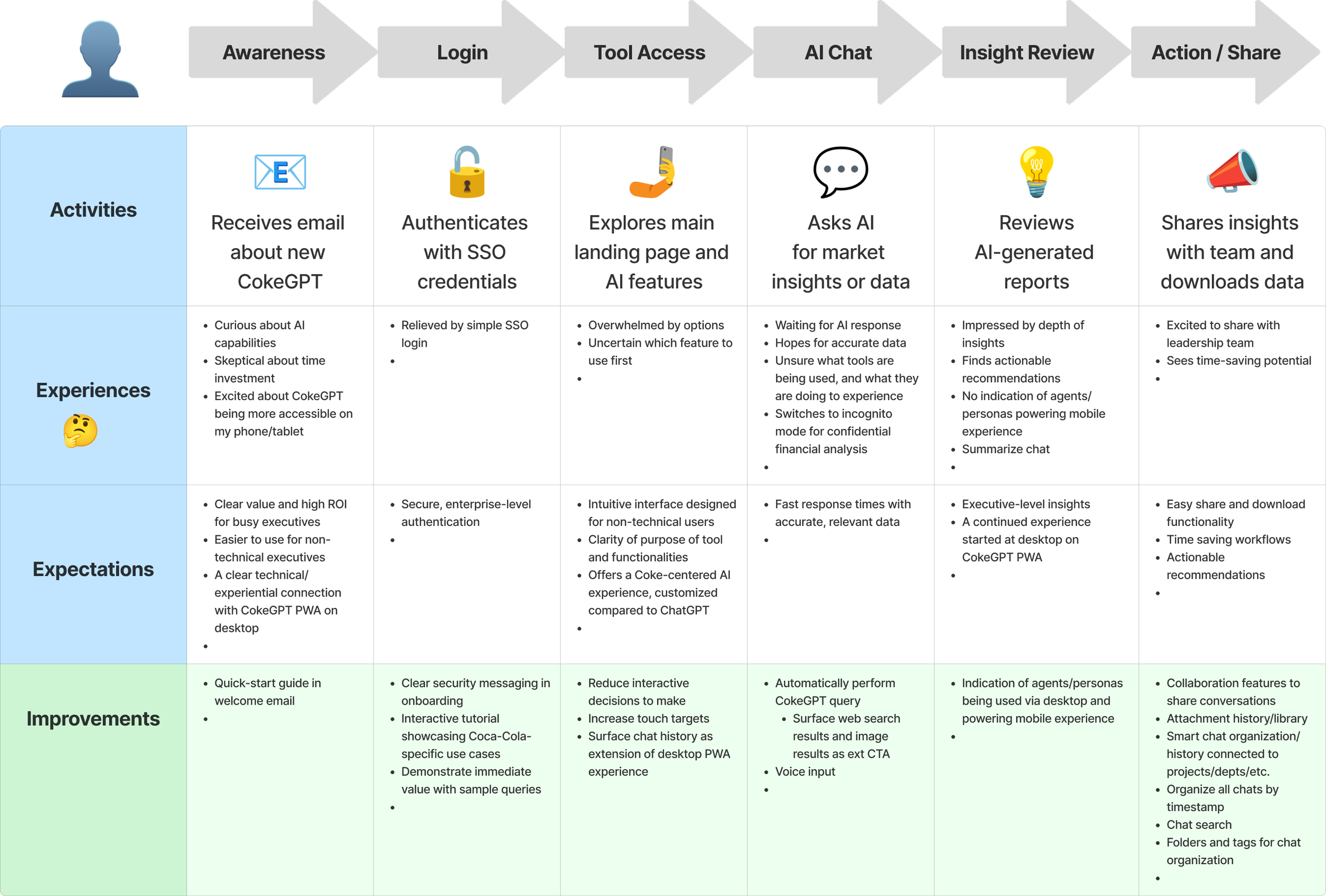
Three rapidly prototyped design directions went in front of the team before a single thing was built in Figma.
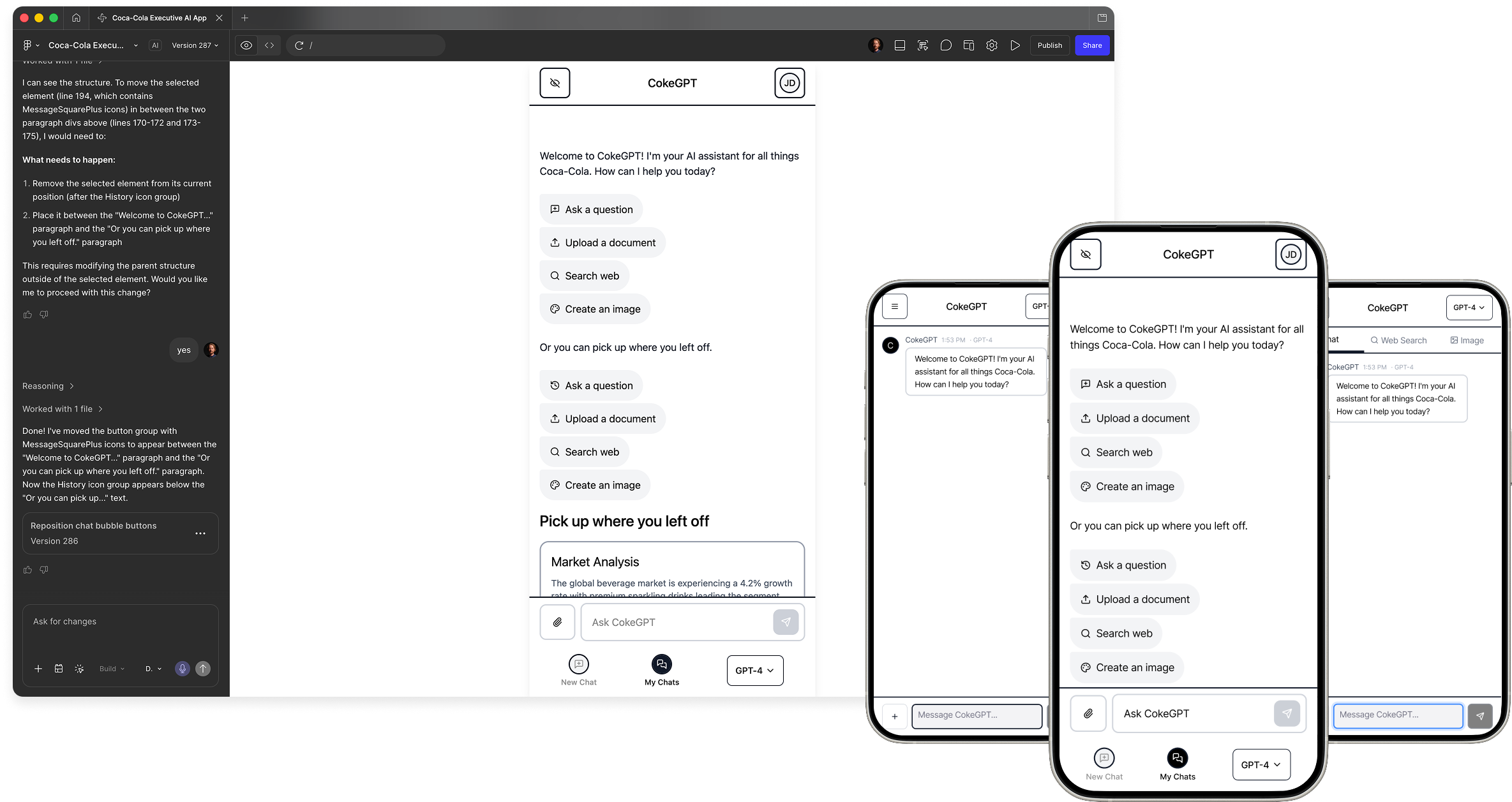
Wireframing and user flows
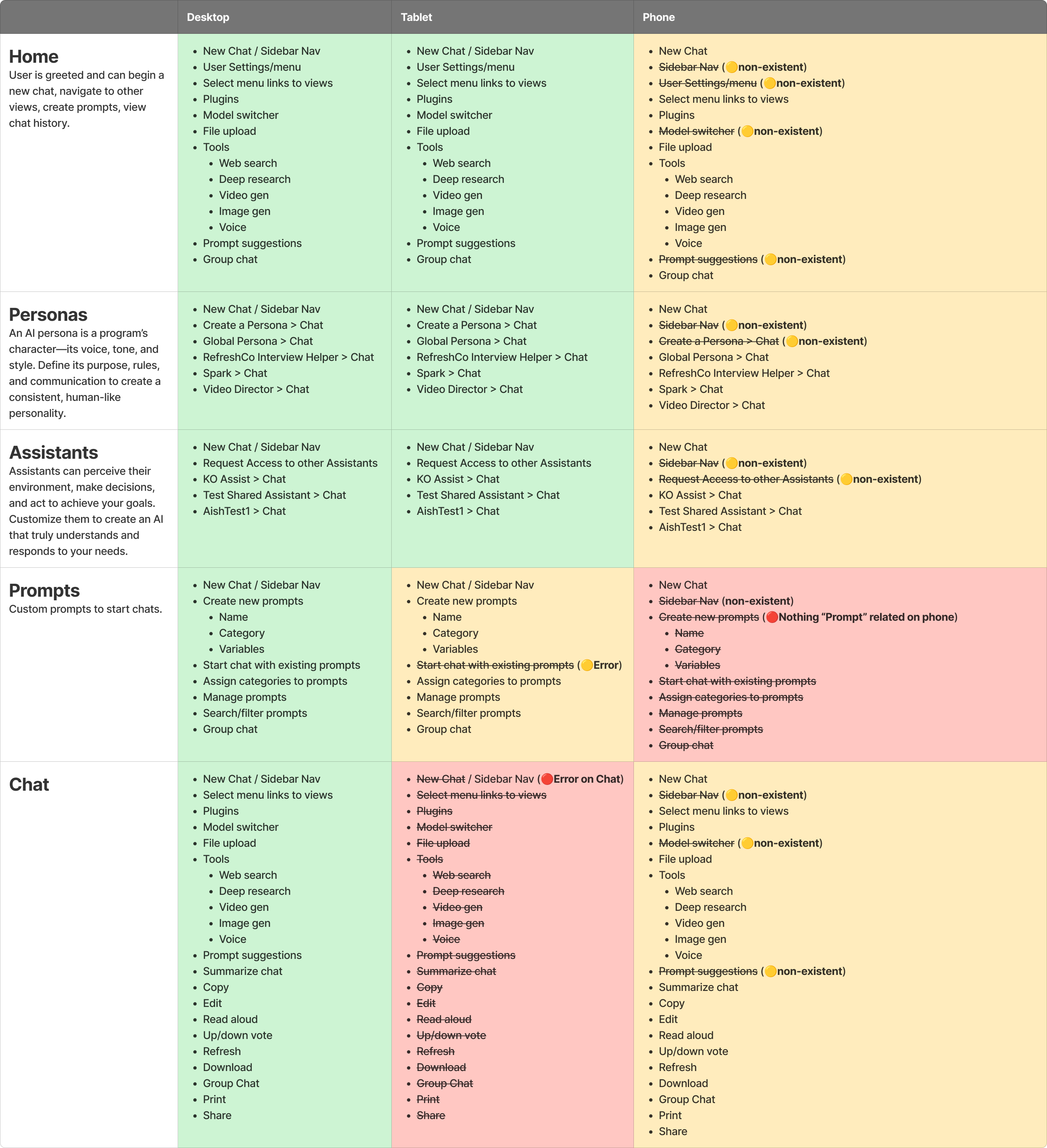
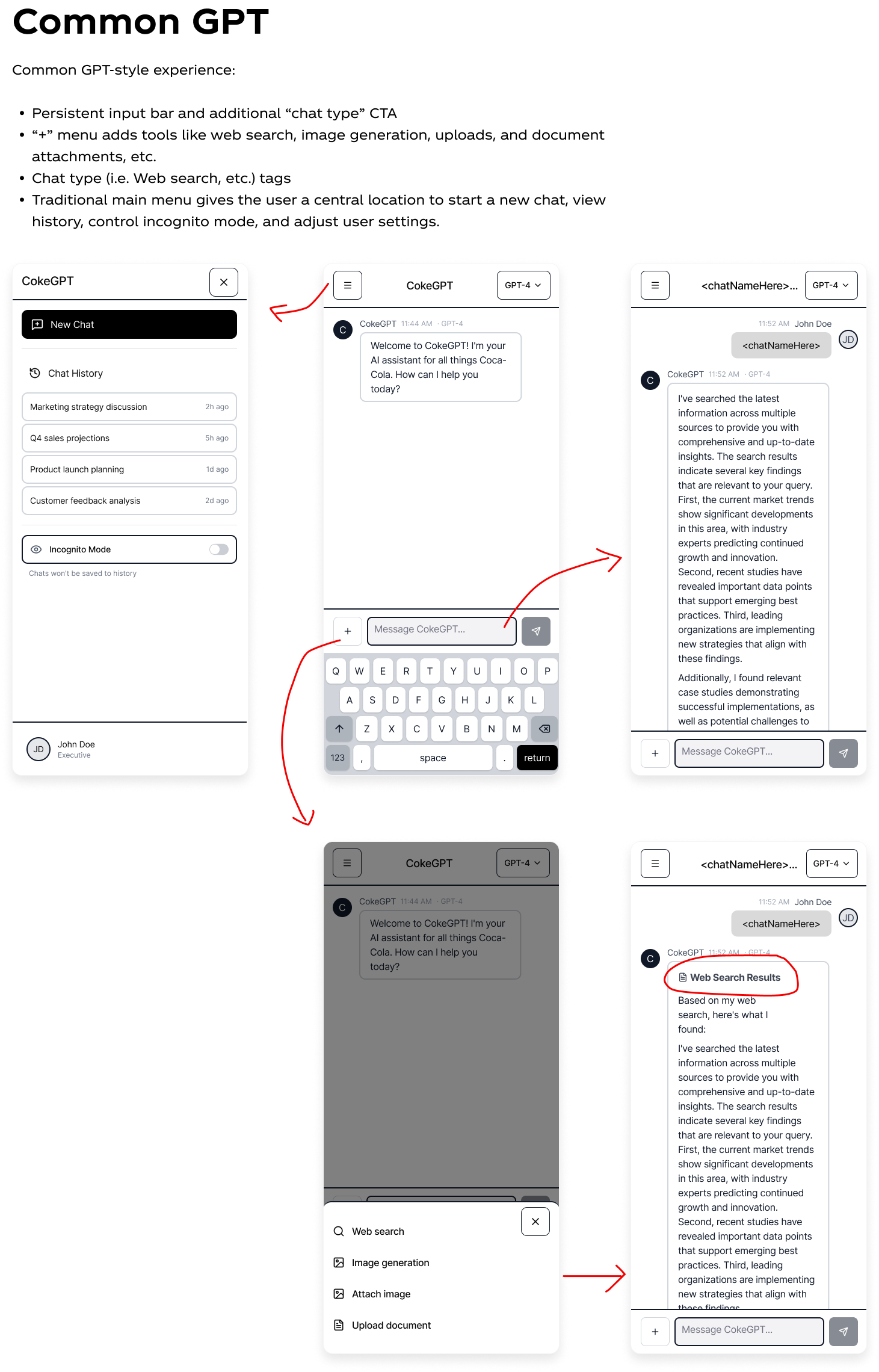
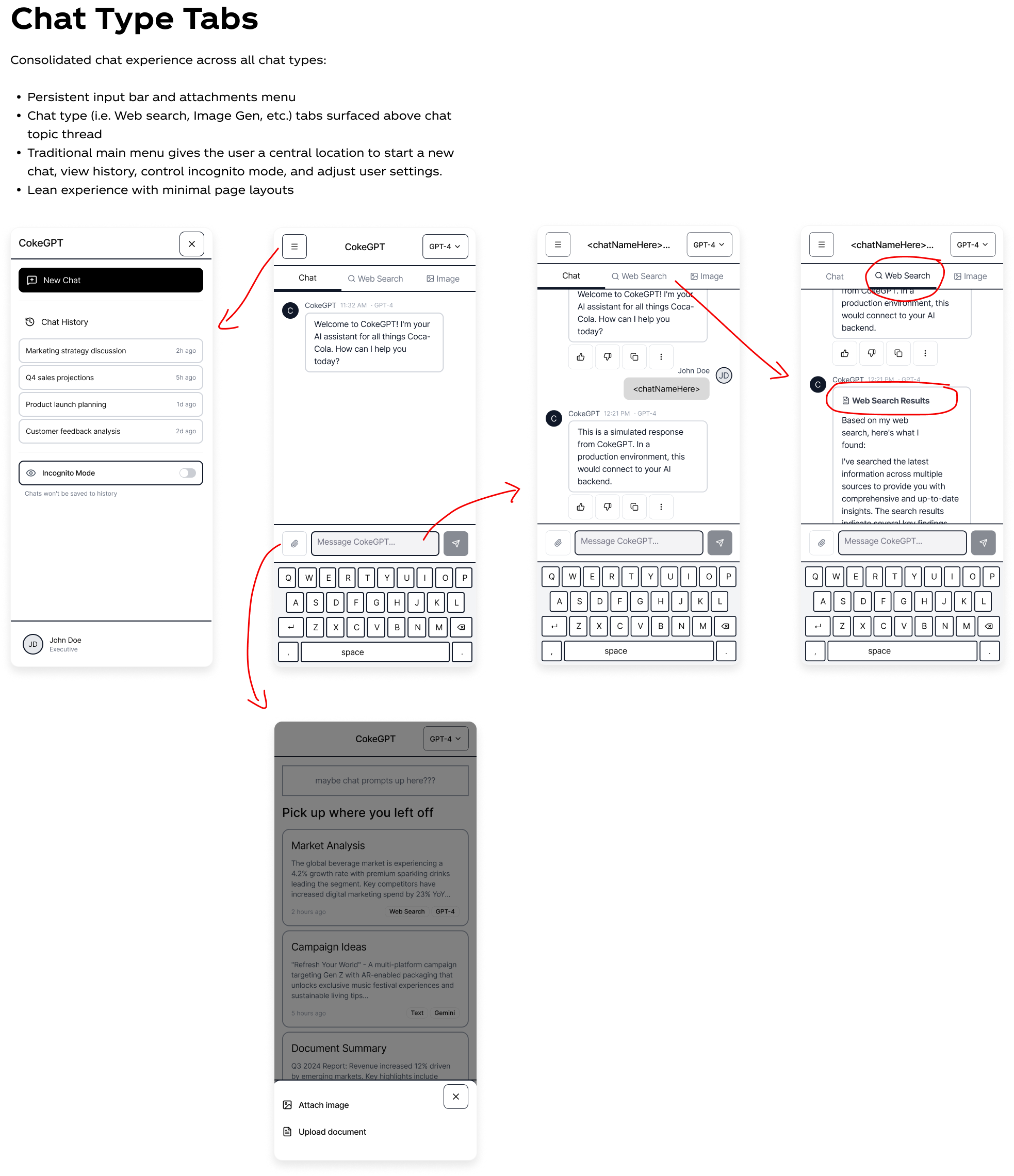
All three directions got the same UX exploration. User flows and wireframes for each one, built out enough to feel real and get directional feedback before committing to a single path.
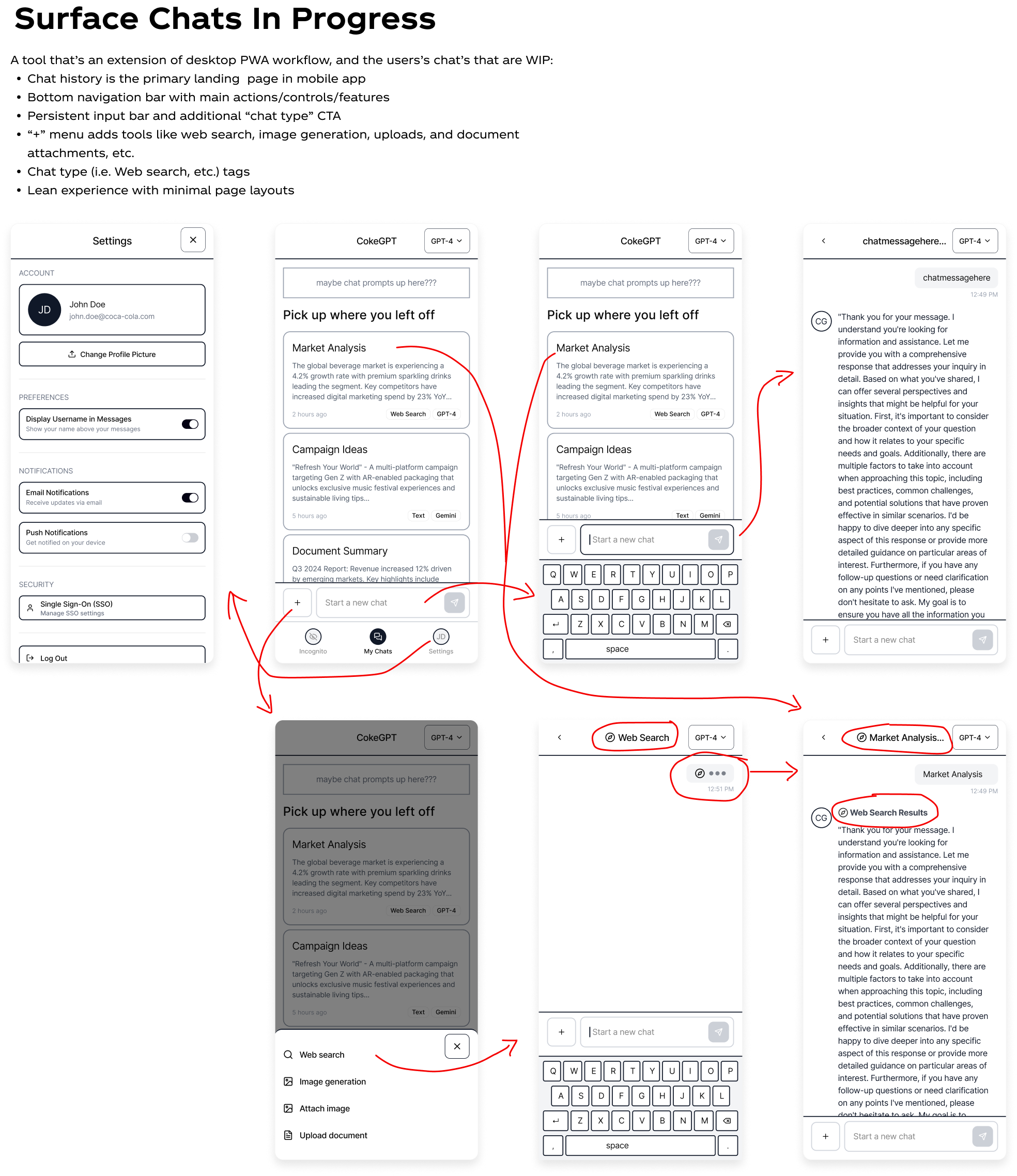
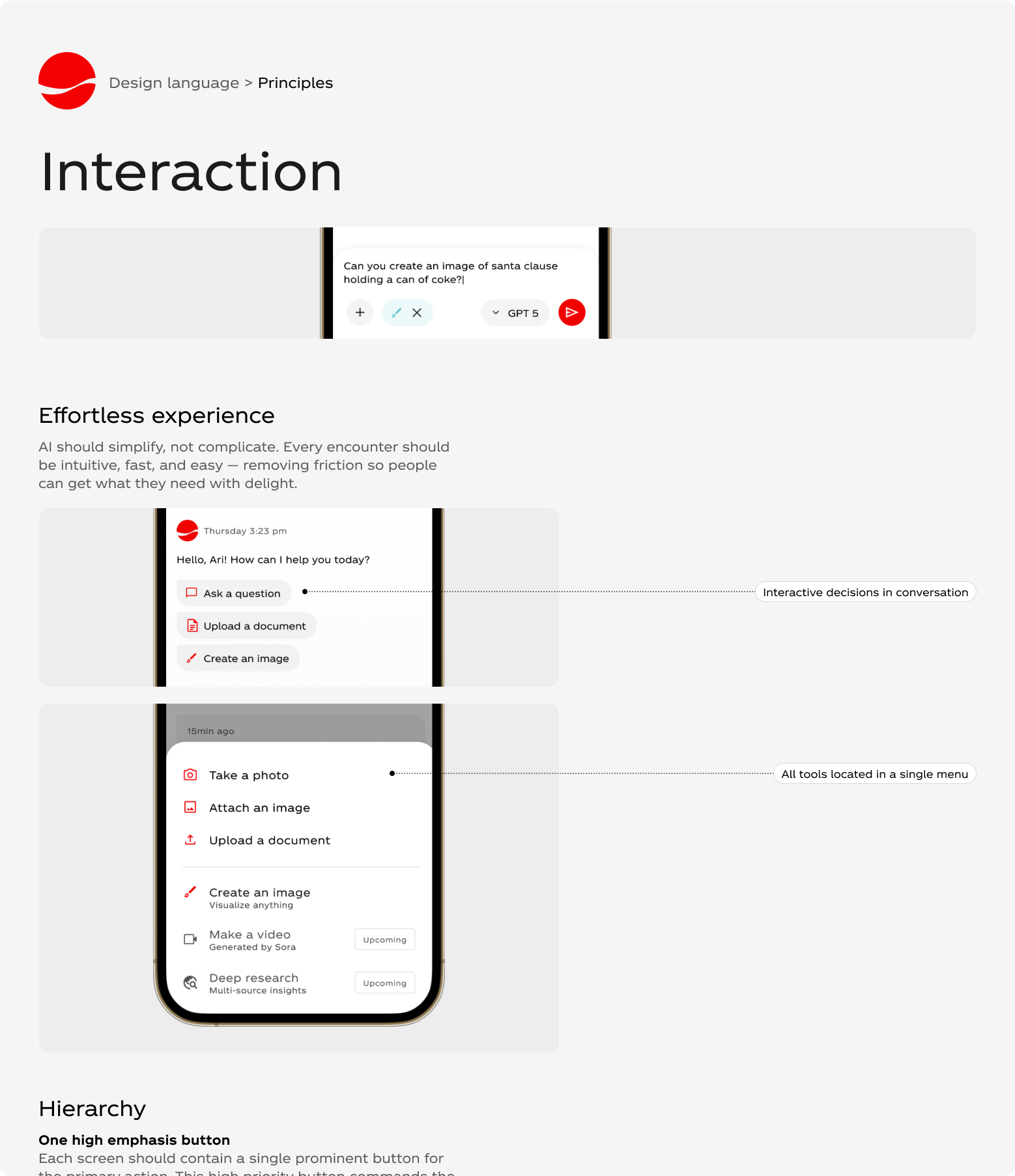
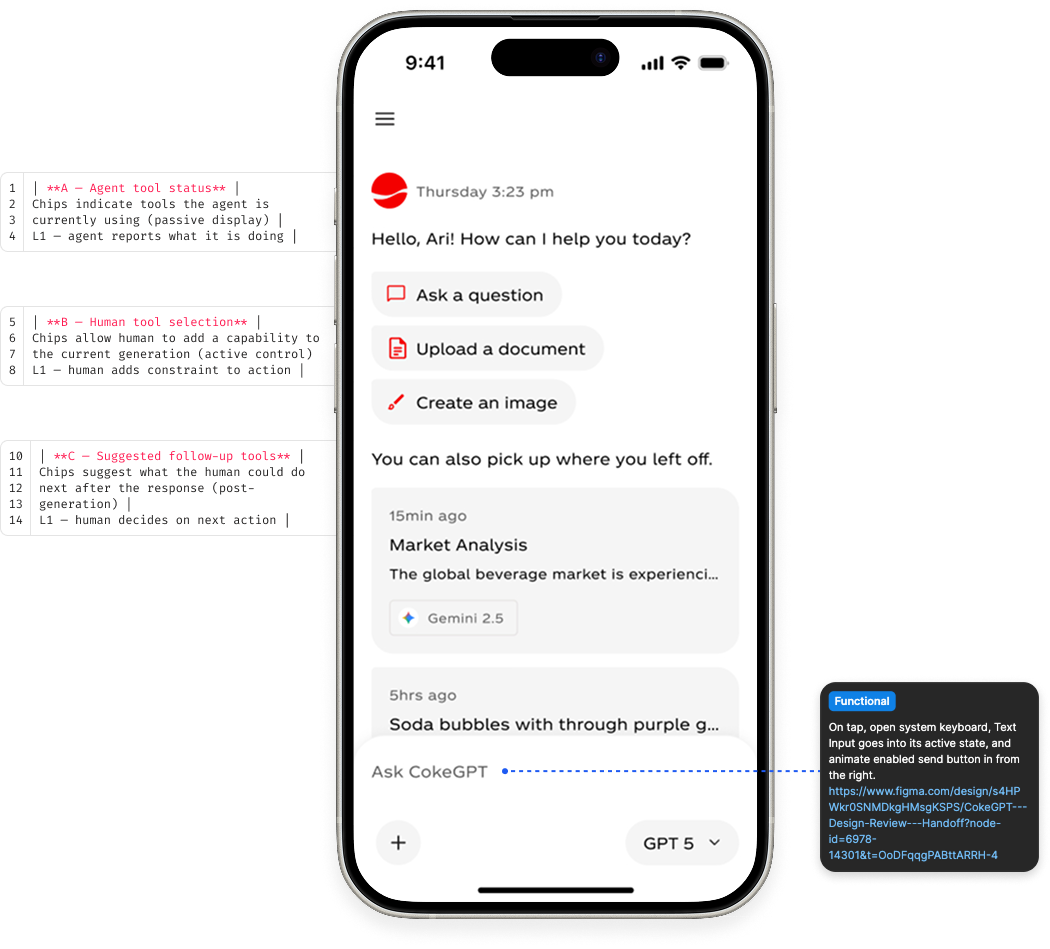
The wireframes covered all features. Key decisions documented inline: input bar placement, how the AI surfaces tool status without interrupting, and how follow-ups appear progressively.
Design language
Discovery didn't just inform the product. It built the foundation.
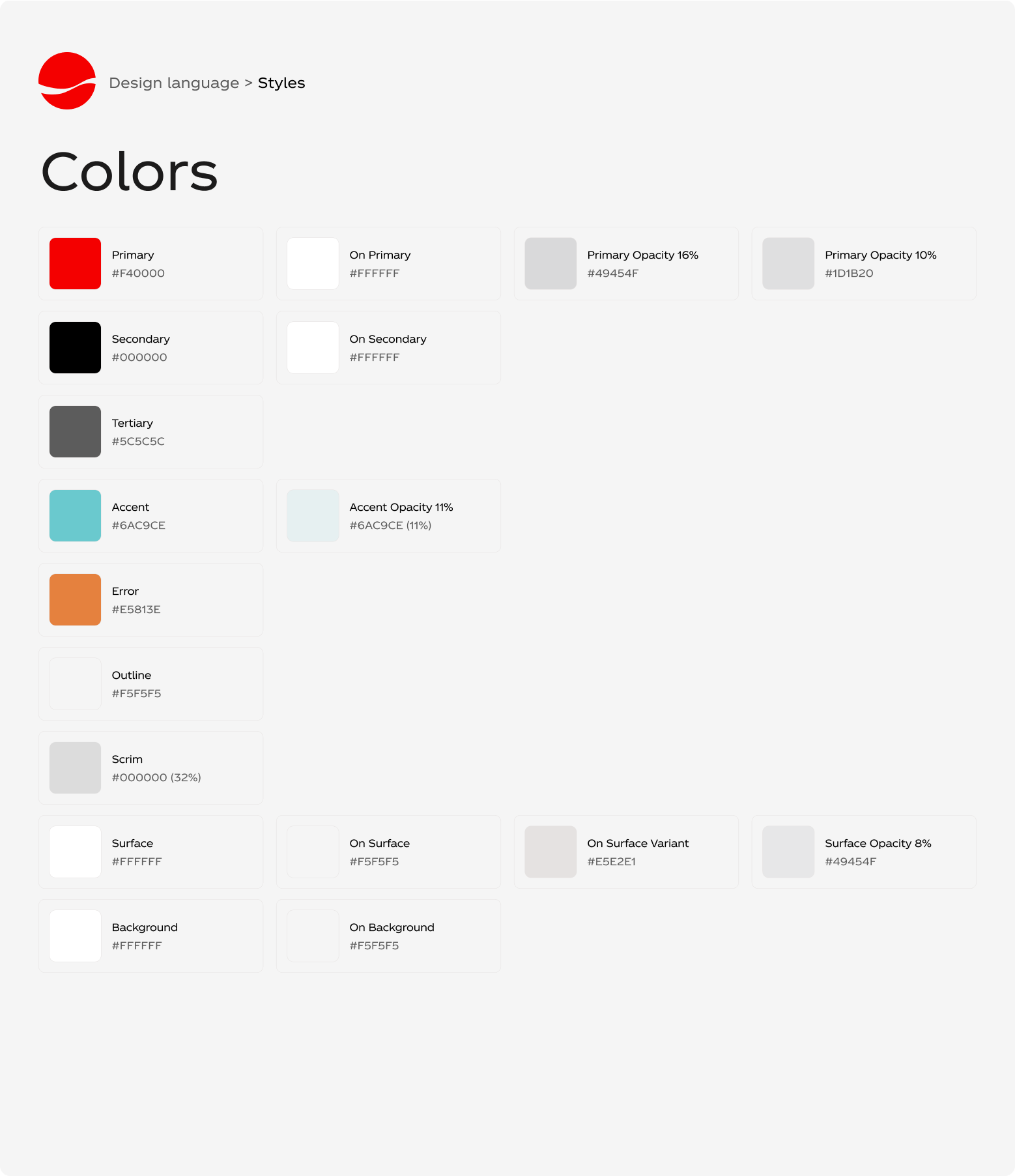
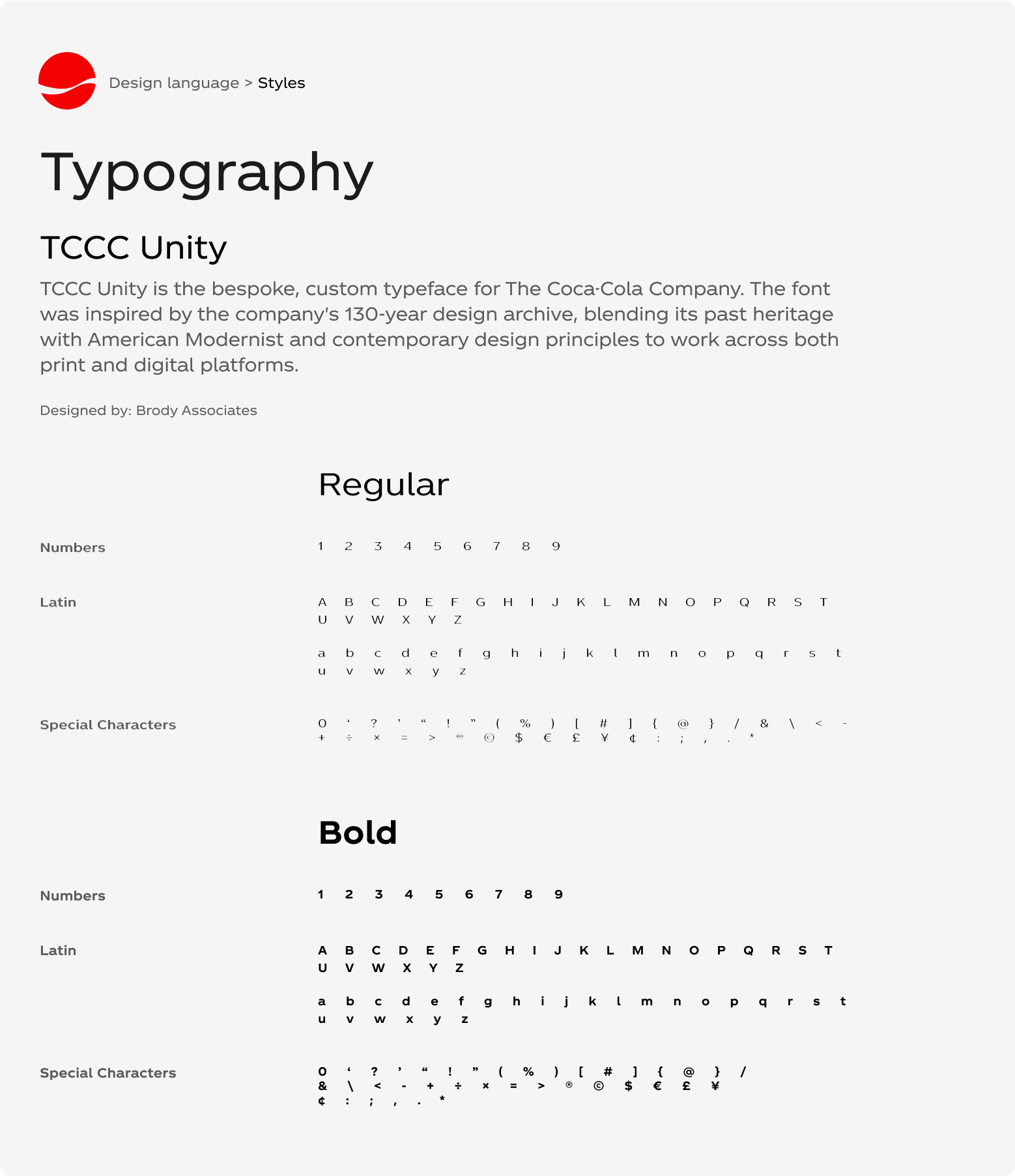
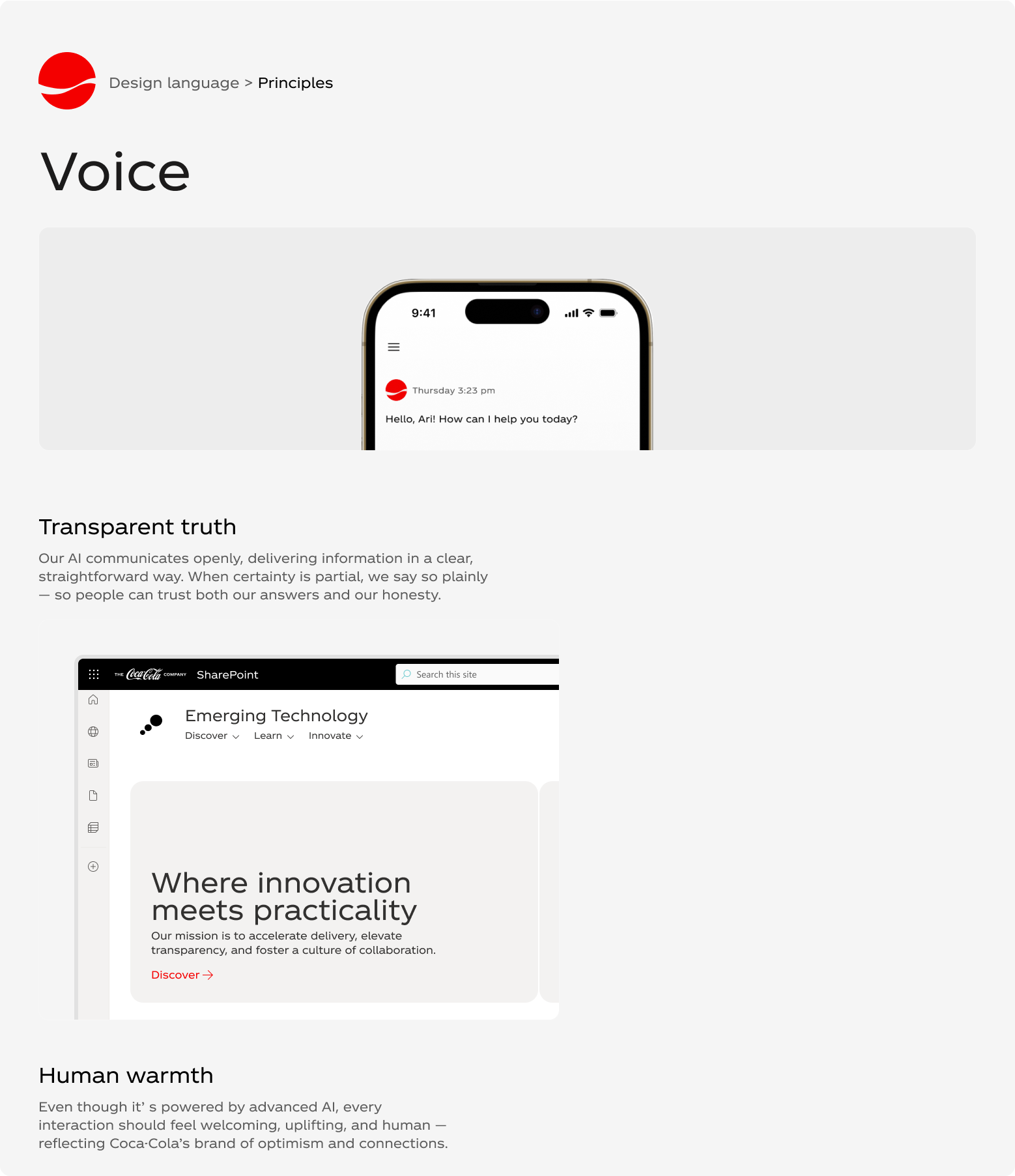
Principles to hold every Coke AI product accountable. Familiar first. Contextually aware. Progressively disclosed. Trustworthy by design. Coke-native. Built to grow.
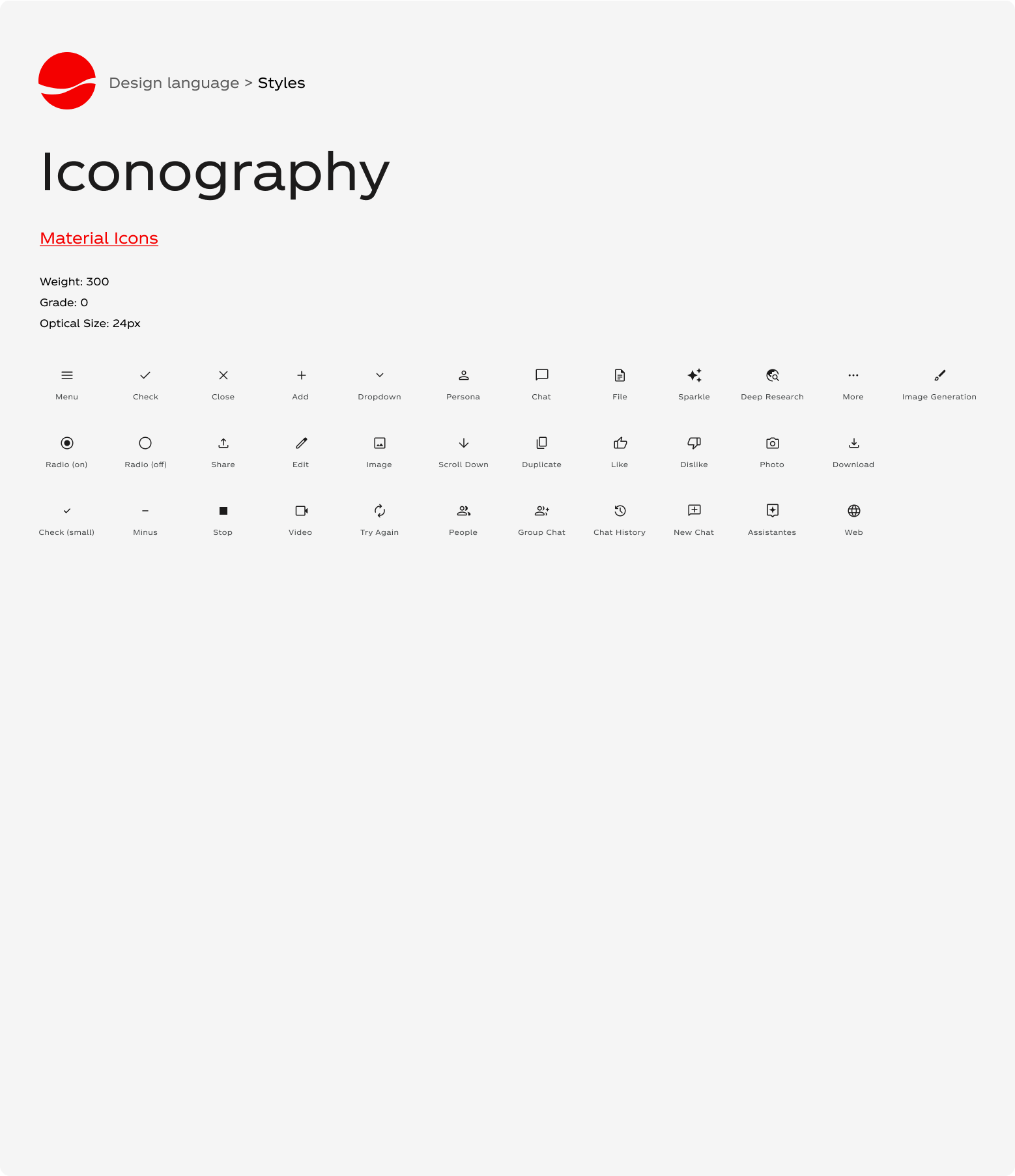
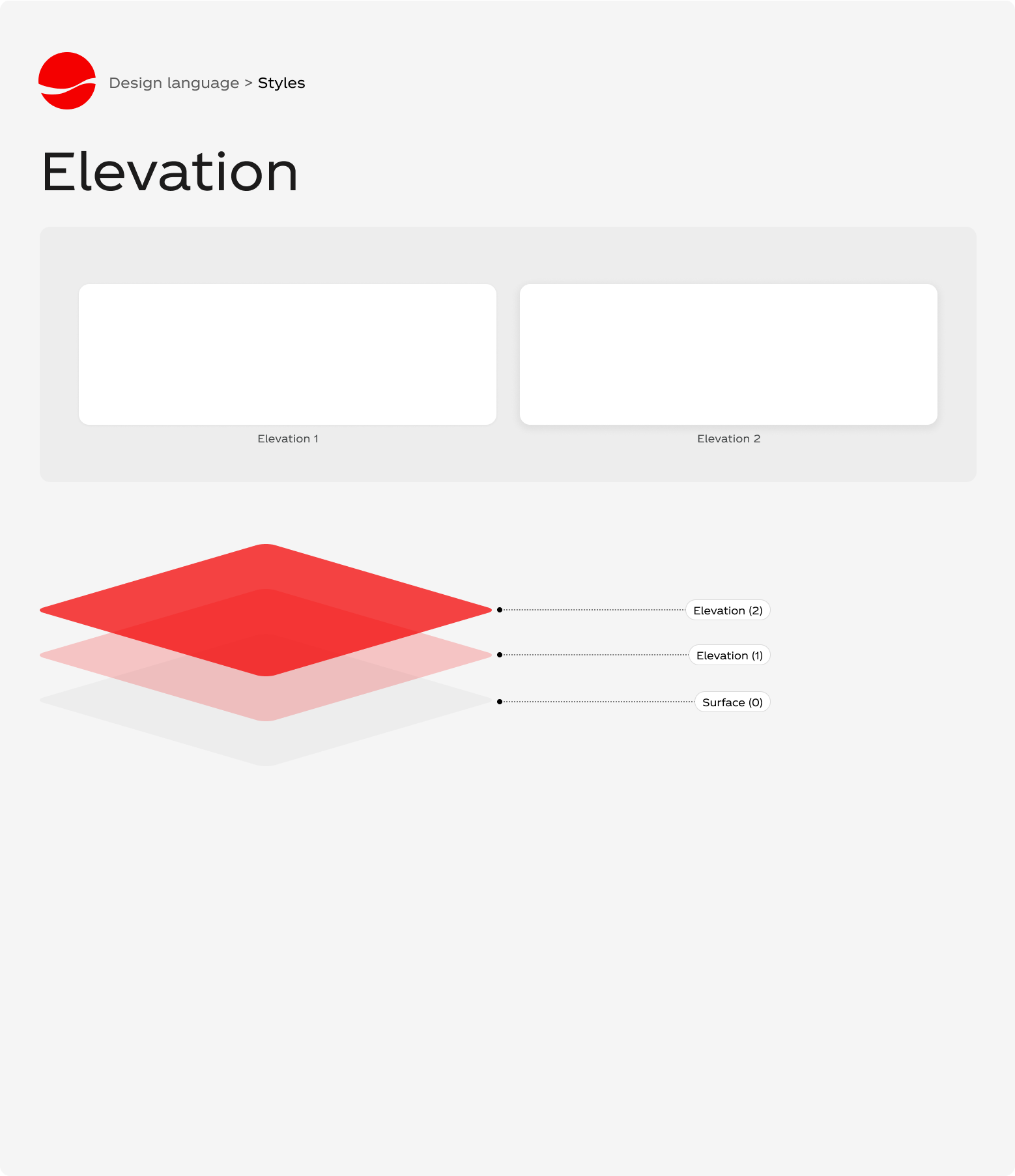
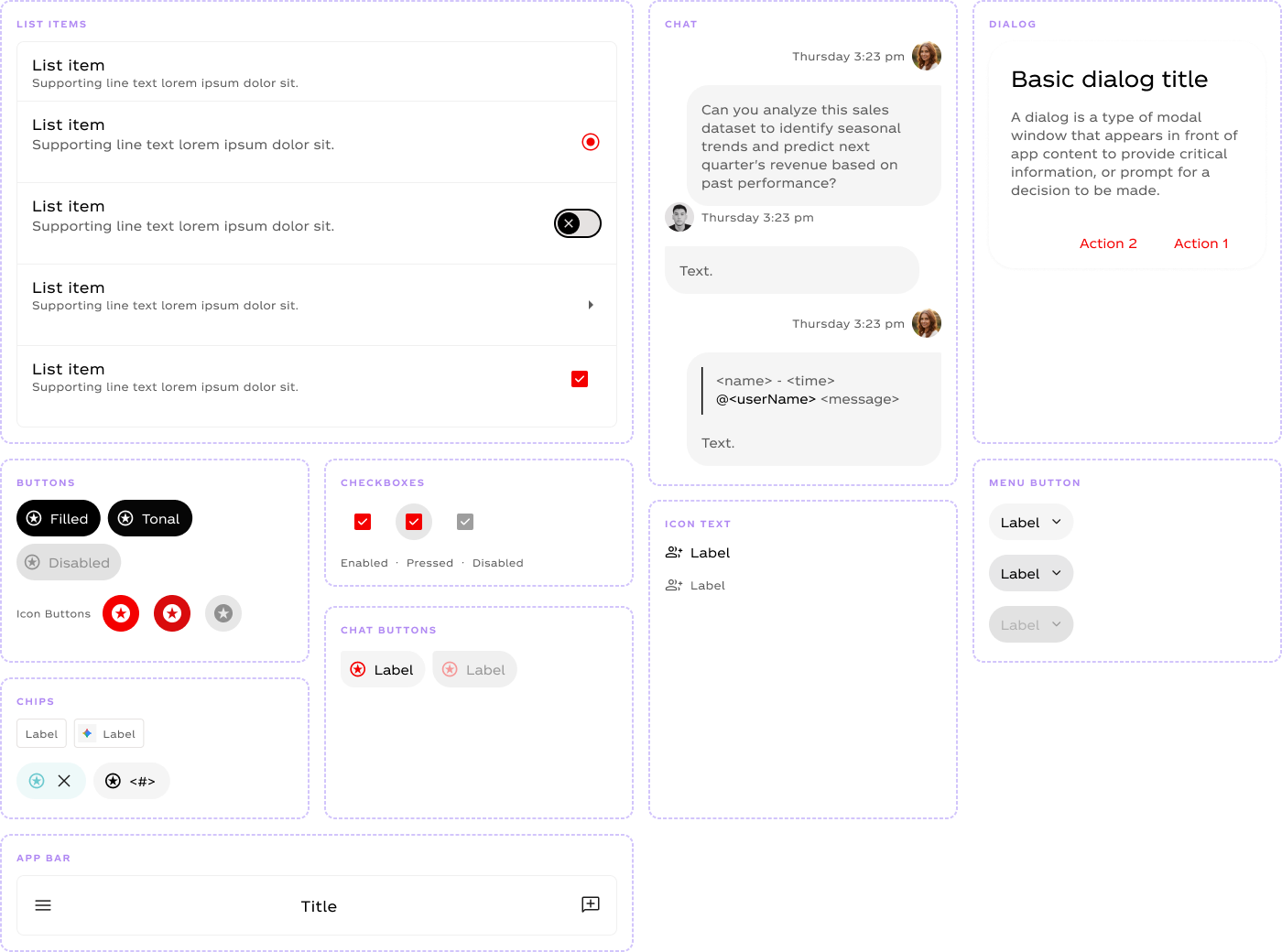
Underneath was component library and token system built to govern not just CokeGPT, but everything that came after it.
CokeGPT redesigned
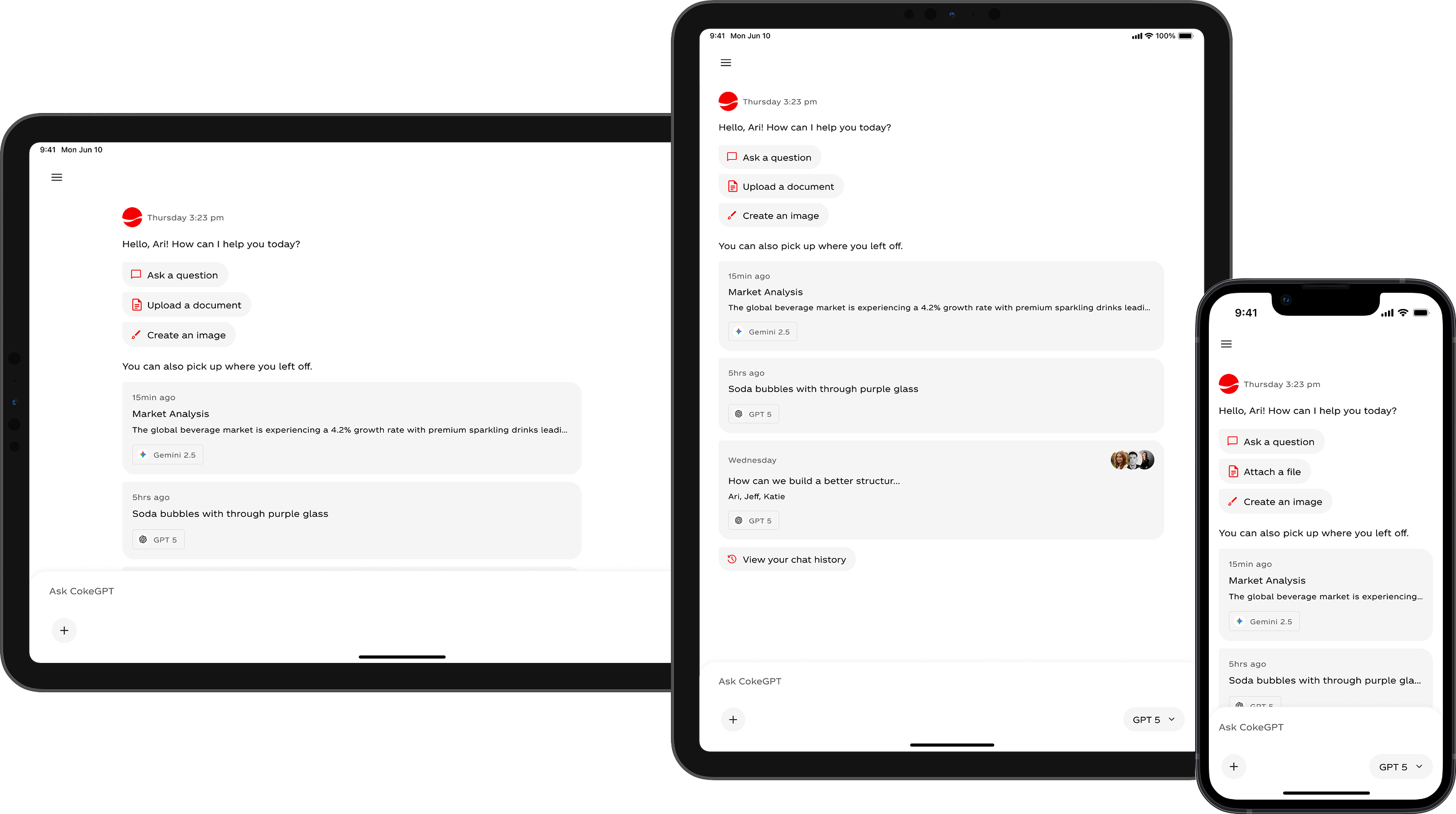
Eight features. Full specs across phone, tablet, and landscape.
We also wrote the agentic UI pattern spec from scratch, defining how the interface communicates what the AI is doing, what the human controls, and what comes next. The coherence of the system let the dev team use AI coding tools to accelerate the build.
The workspace vision
While Phase 1 was shipping, we were asking a harder question. What should the future of AI at Coke actually look like?
Other teams were building tools in isolation. Employees had no single place to start. The pilot put CokeGPT in real hands early and real usage became real feedback.
CokeGPT wouldn't be replaced. It would be one of the first products living inside a unified AI workspace.