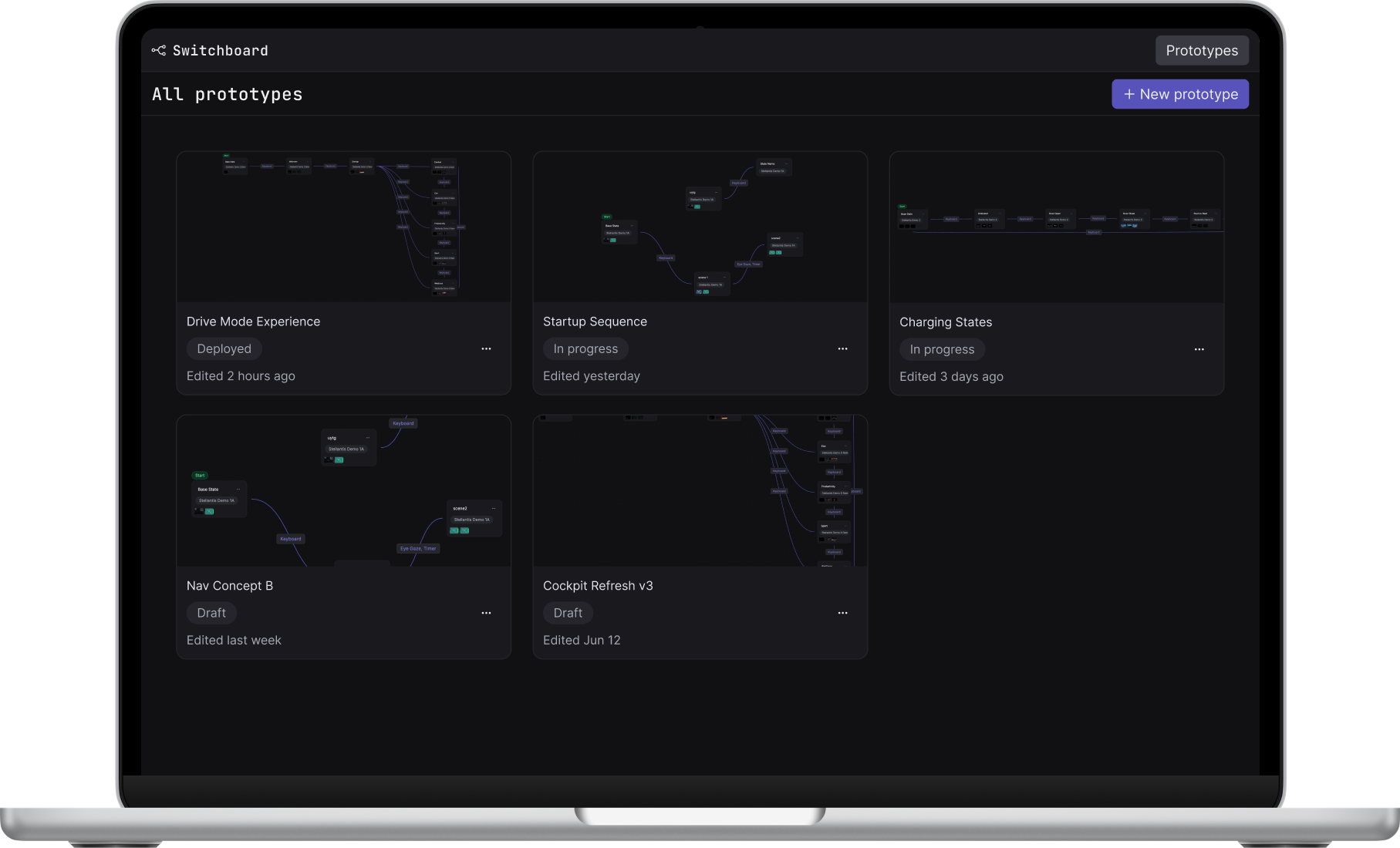
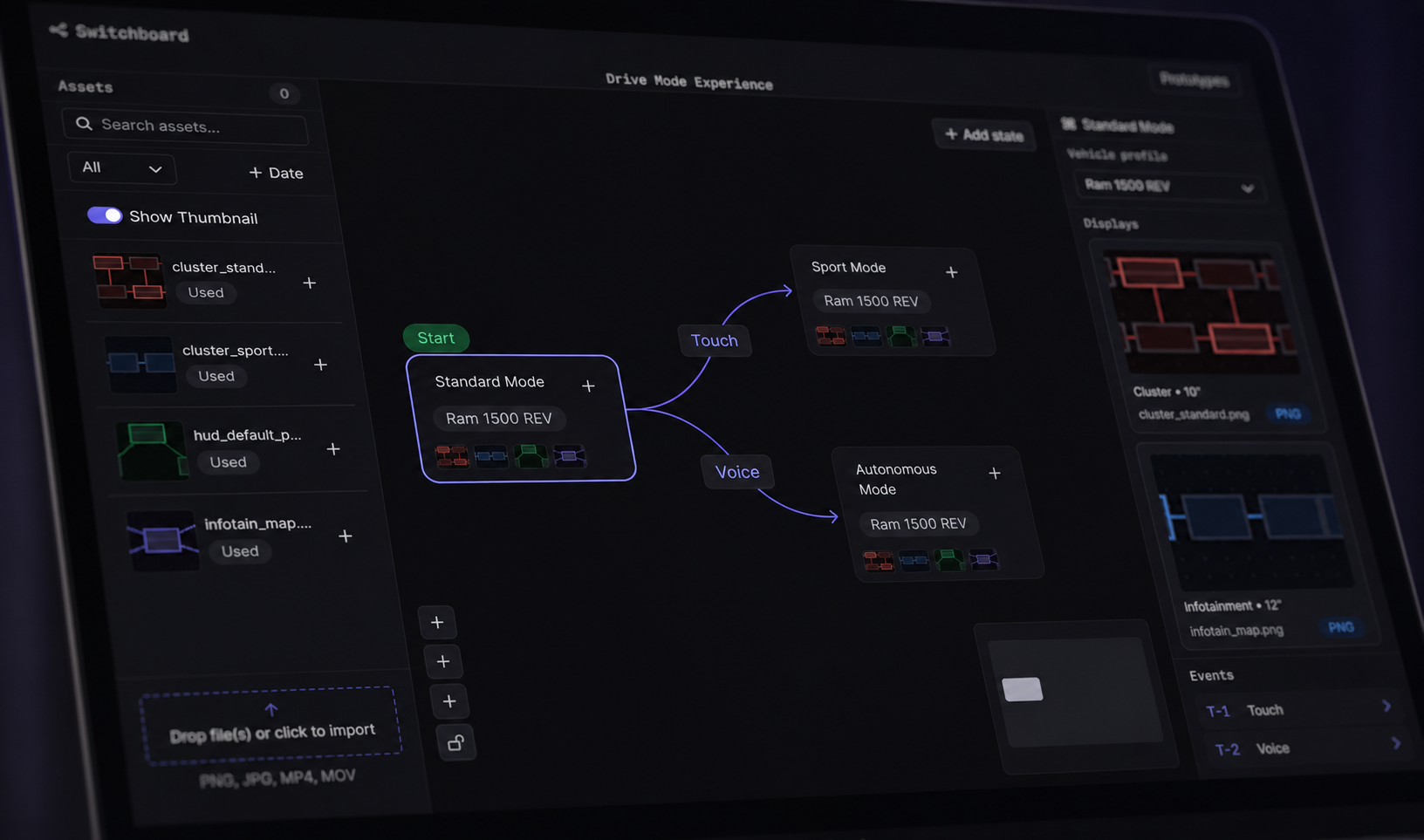
SwitchboardStellantis designers had a decade-old problem: getting a cockpit concept onto the physical build-up vehicle (the BuC) required engineering, and every handoff lost something and was expensive. They asked for a prototyping tool. We built a pipeline from any design tool to a physical cockpit, same day, no engineers required.
Product Design, Design System, Automotive UX, UX/UI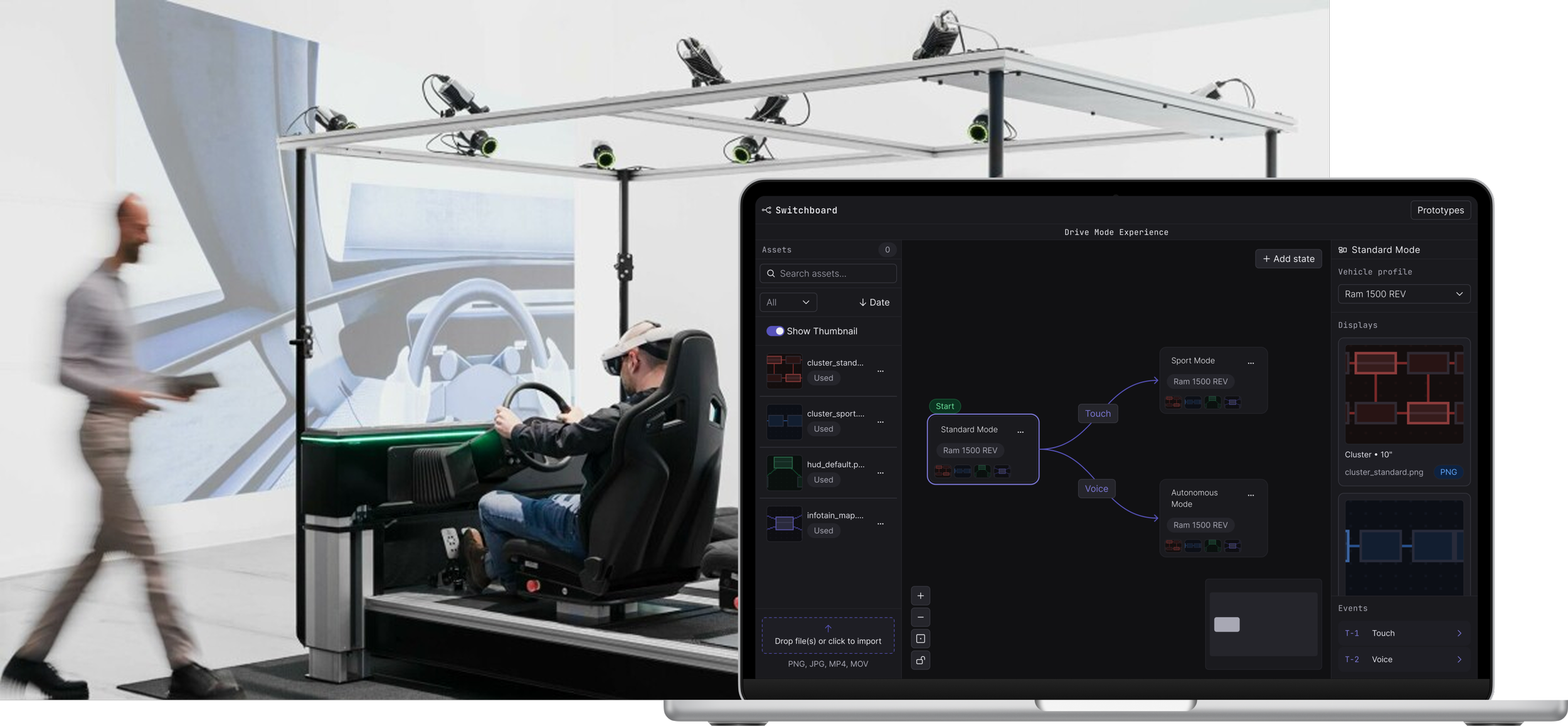
Business challenges and user needs
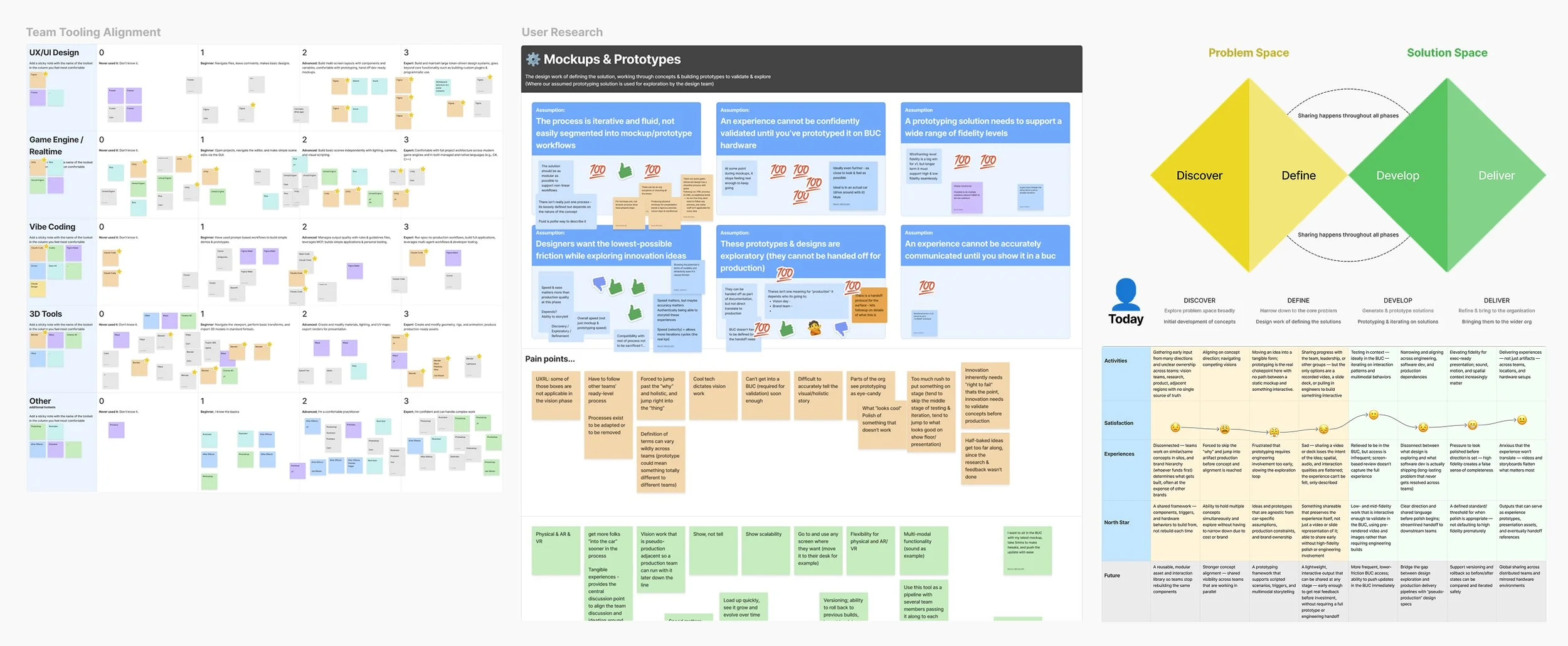
We started with a hypothesis-driven workshop: assumptions the Stellantis team voted on, a tooling skills matrix, pain points captured phase by phase. Then we synthesized it into a journey map of how concepts actually move from idea to vehicle today. The findings were blunt. Prototyping was the bottleneck, not ideation.
Tool research
Before designing anything, we studied how the industry already solves "programming without code," guided by what the workshop told us about the team's actual skills. IFTTT and consumer automation, block coding, Apple Shortcuts, and node-based tools from Quartz Composer to Unity. Analyzing what they get right, where they break for multi-input multi-output work, and what a designer could realistically learn on day one.
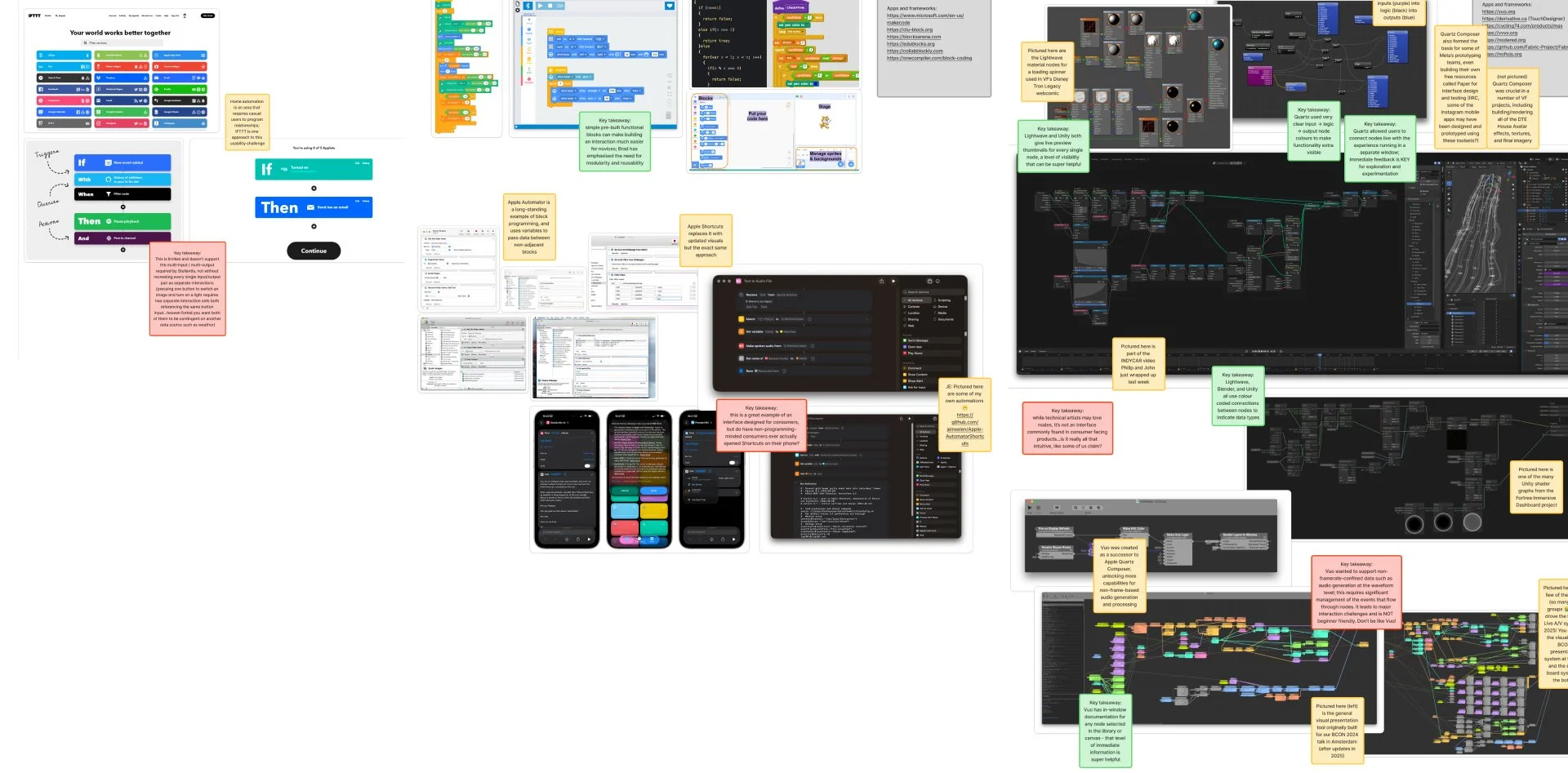
Catered to the team’s strengths and weaknesses
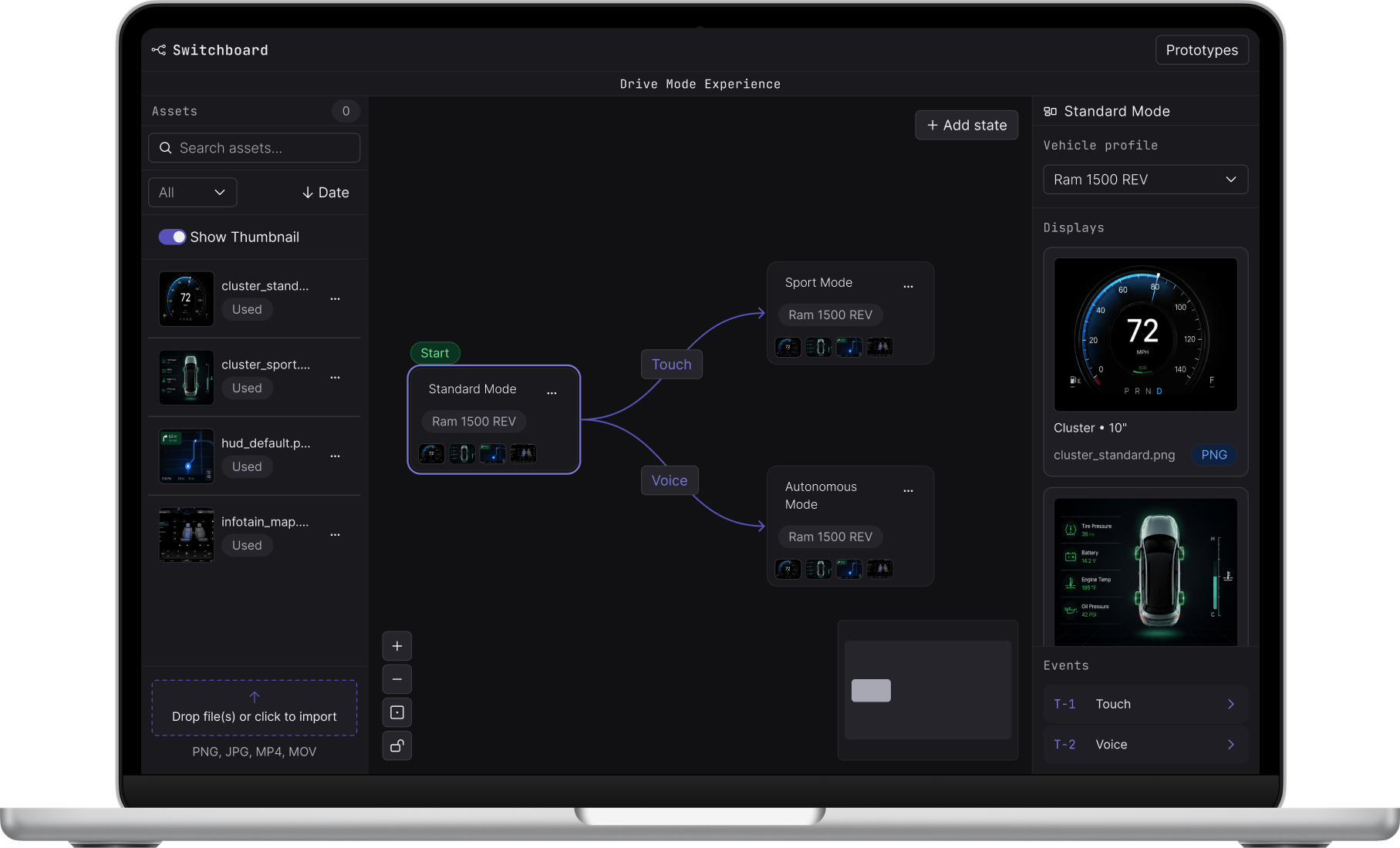
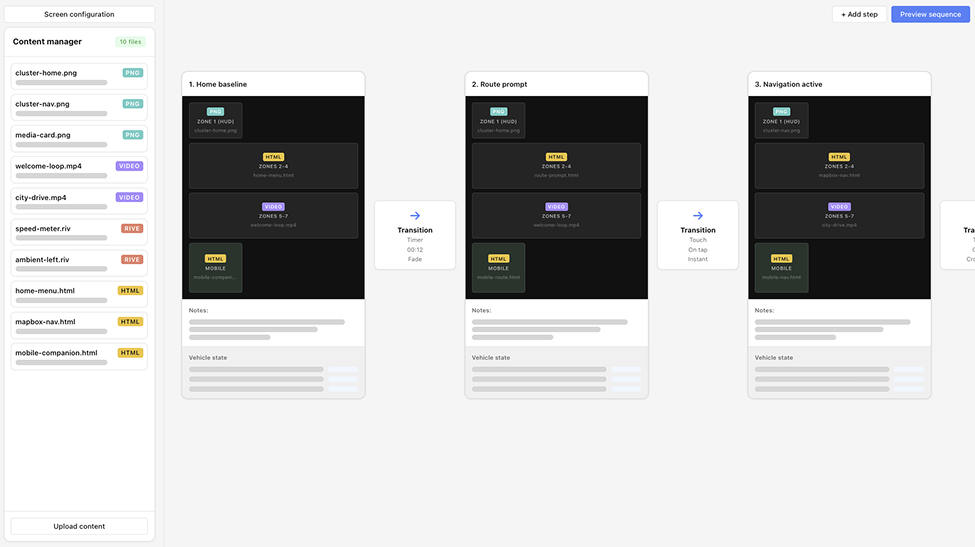
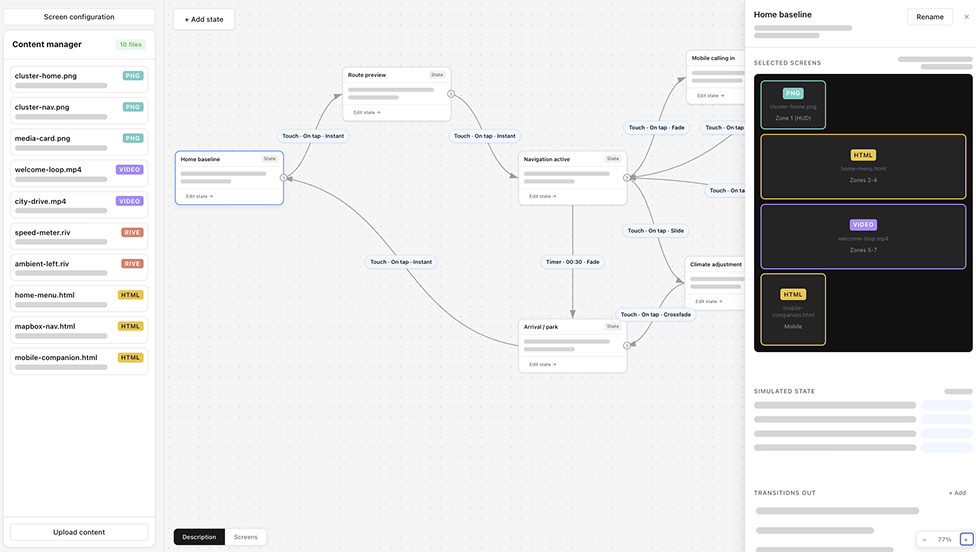
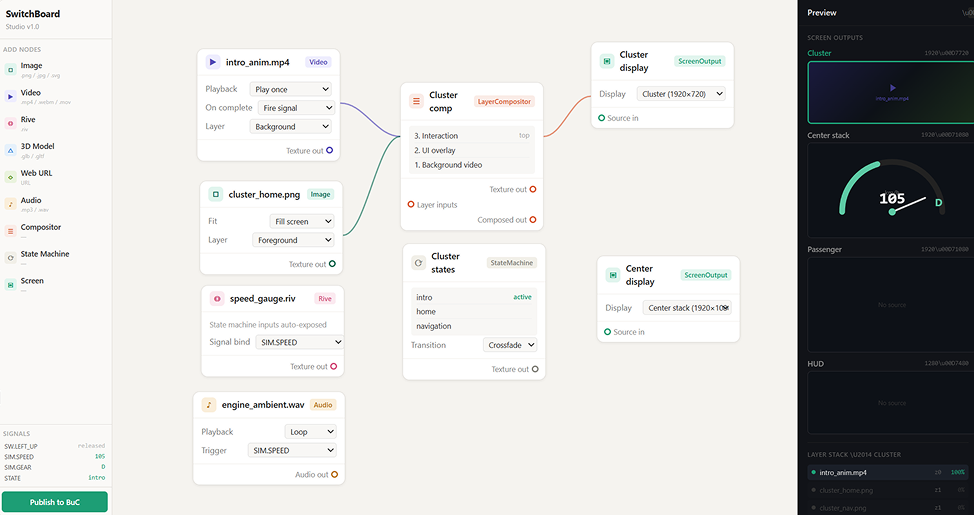
The core design question was the authoring mental model. We prototyped four: storyboard, state machine, node editor, natural language. Storyboards were a glorified PowerPoint. Node editors meant you might as well use Unity. The state machine sat in between: simple to start, expandable without changing the mental model. It became the foundation of the product.
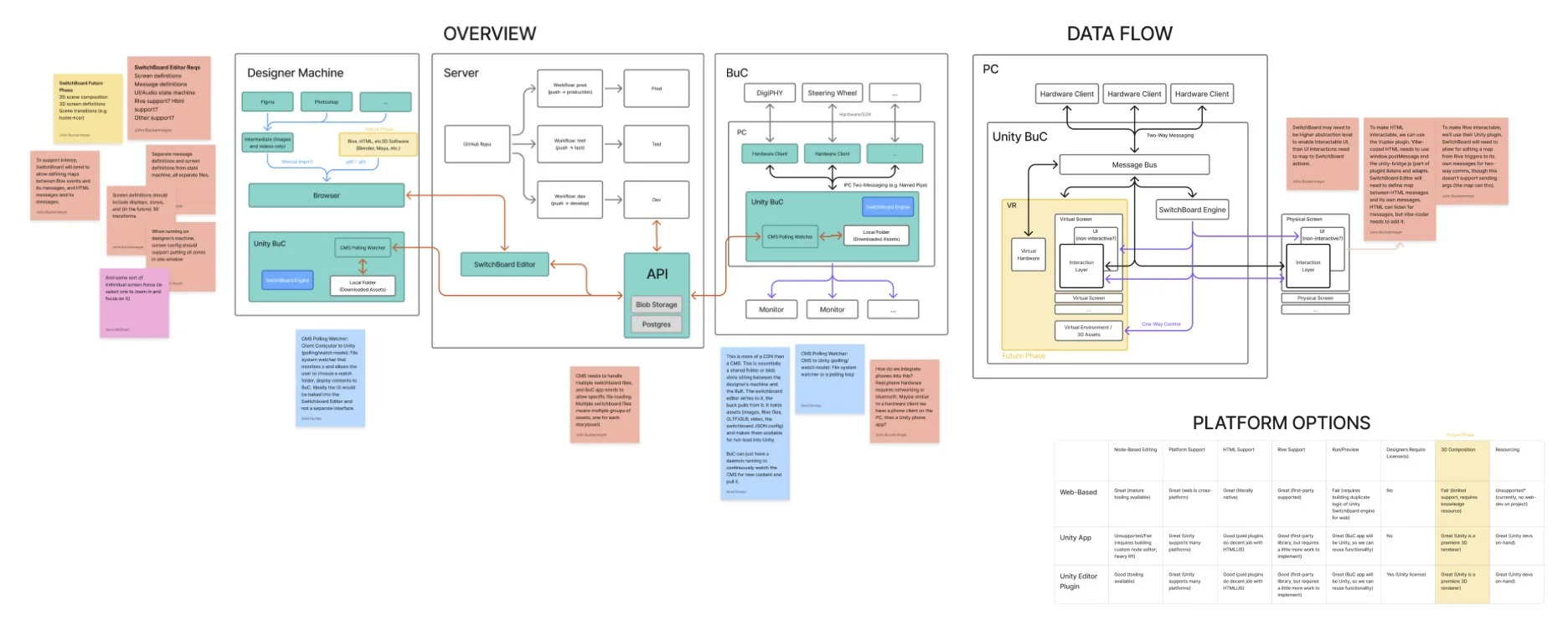
Understanding the architecture
A prototyping pipeline that spans a designer's laptop, a cloud config, and physical vehicle hardware can't be designed screen-first. What lives on the designer's machine, what lives on the server, how the BuC pulls and plays content, and which platform (web, Unity app, or plugin) could actually deliver it. Those decisions shaped every interface that followed.
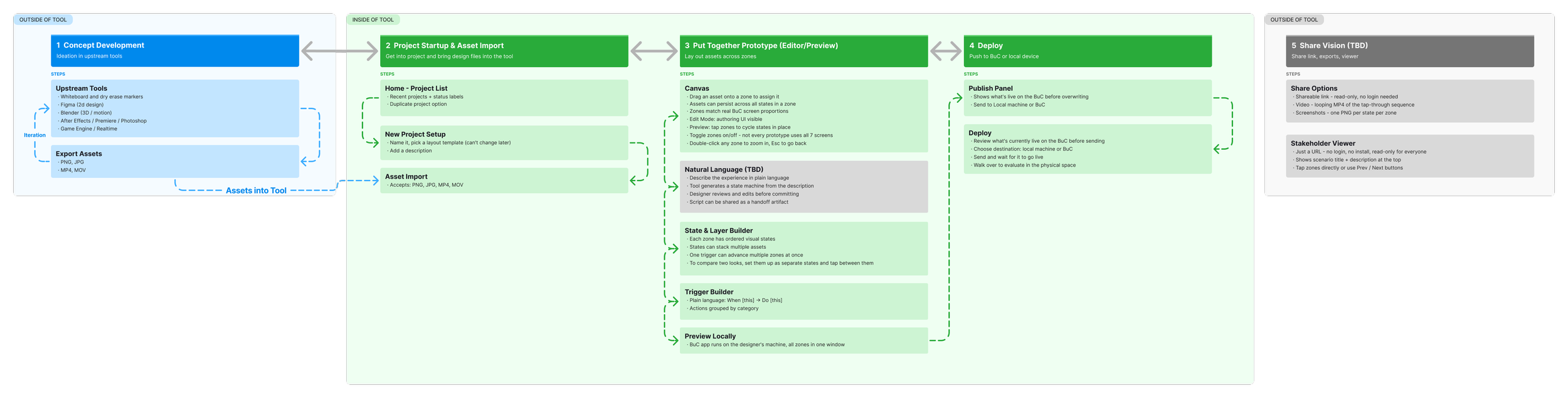
The user flow map
With the system mapped, we defined the end-to-end designer journey: five phases from concept development in upstream tools, through import, prototype assembly, and deploy, to sharing the vision, with a clear line marking what happens inside the tool and what stays outside it.
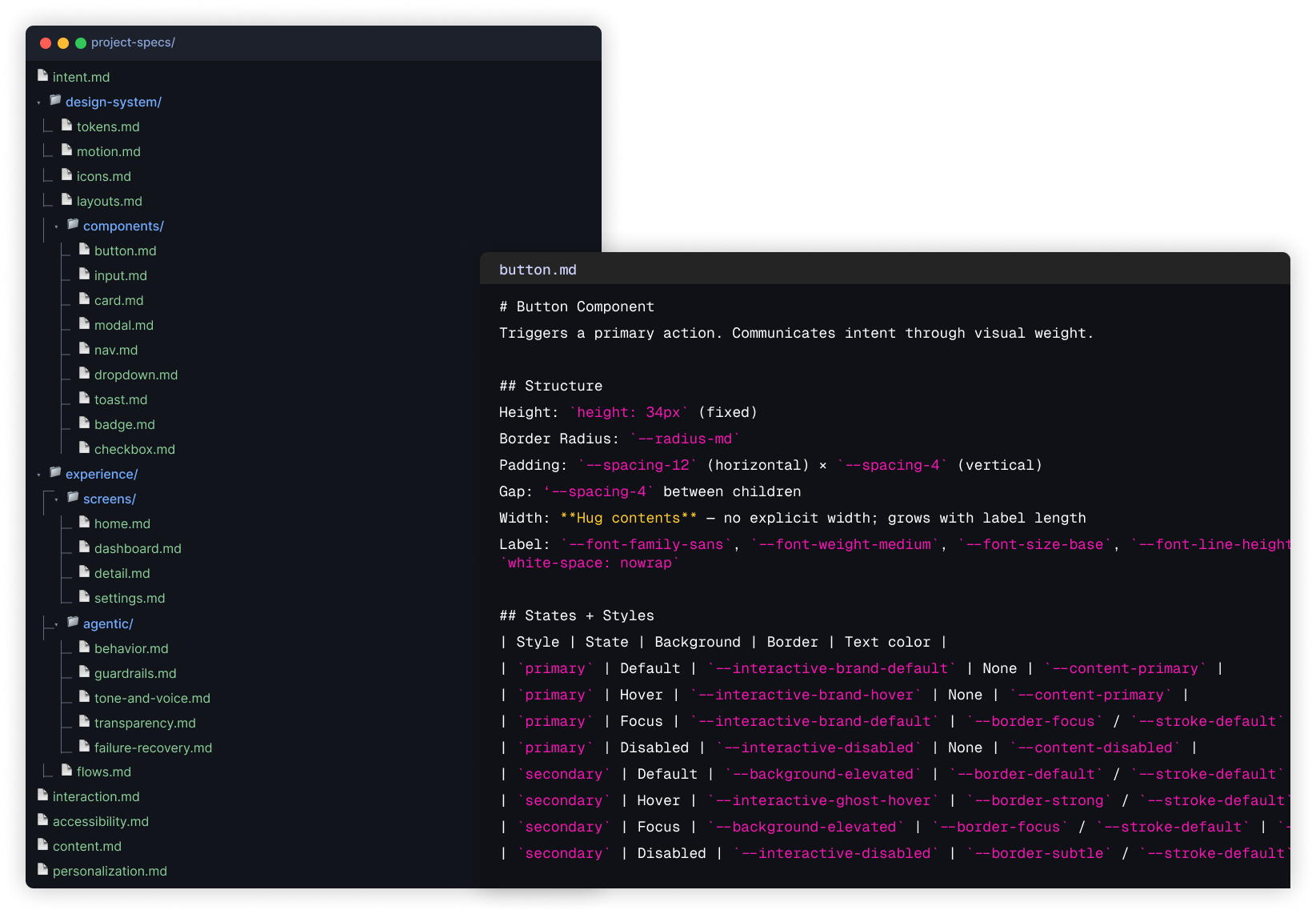
Design language, spec-driven
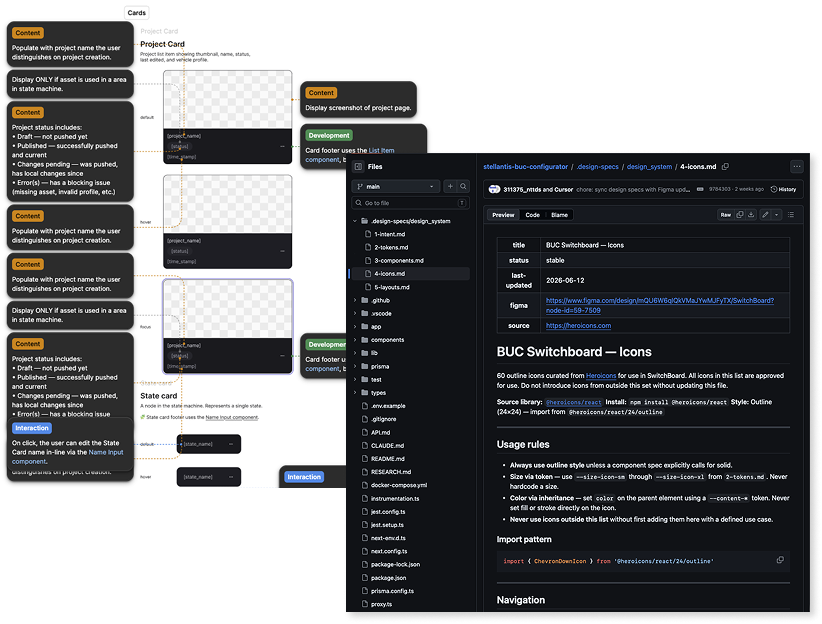
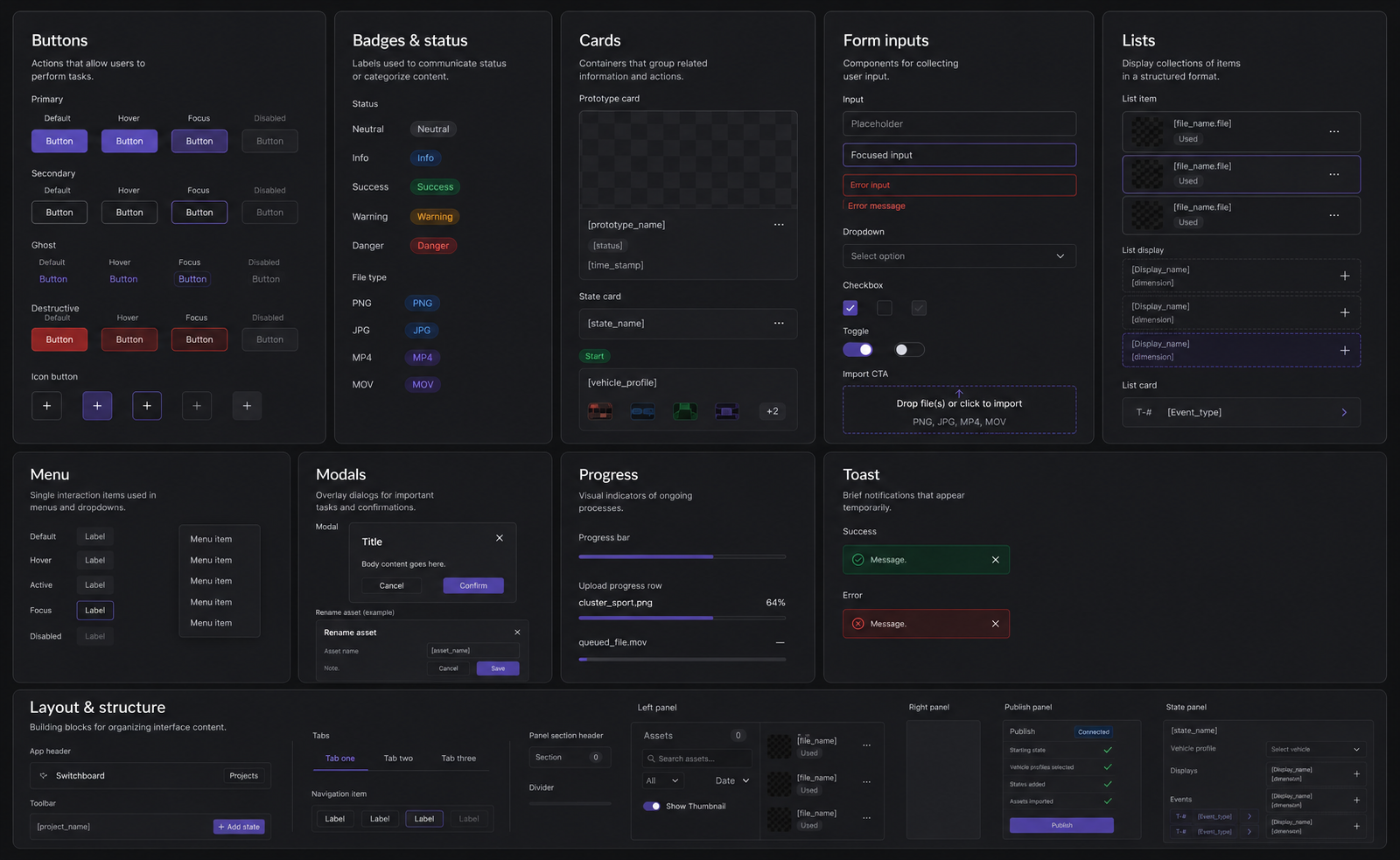
The design system was built to be handed off as specs, not screenshots. Every token, component, and usage rule was authored as versioned markdown files, a single source of truth engineering could build from without interpreting Figma. Claude drafted and validated the specs under design supervision, flagging gaps before engineering started. The result: a fully token-bound system (59 icons, roughly 20 component sets, zero hardcoded values) plus a locked glossary of 19 terms used verbatim everywhere, so designers, engineers, and the spec files themselves all spoke one language.
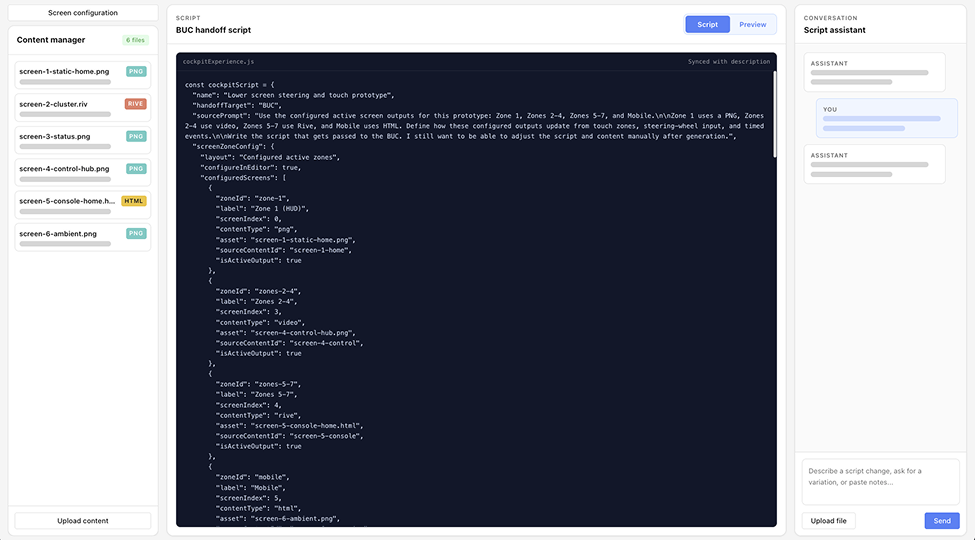
Switchboard designed and built
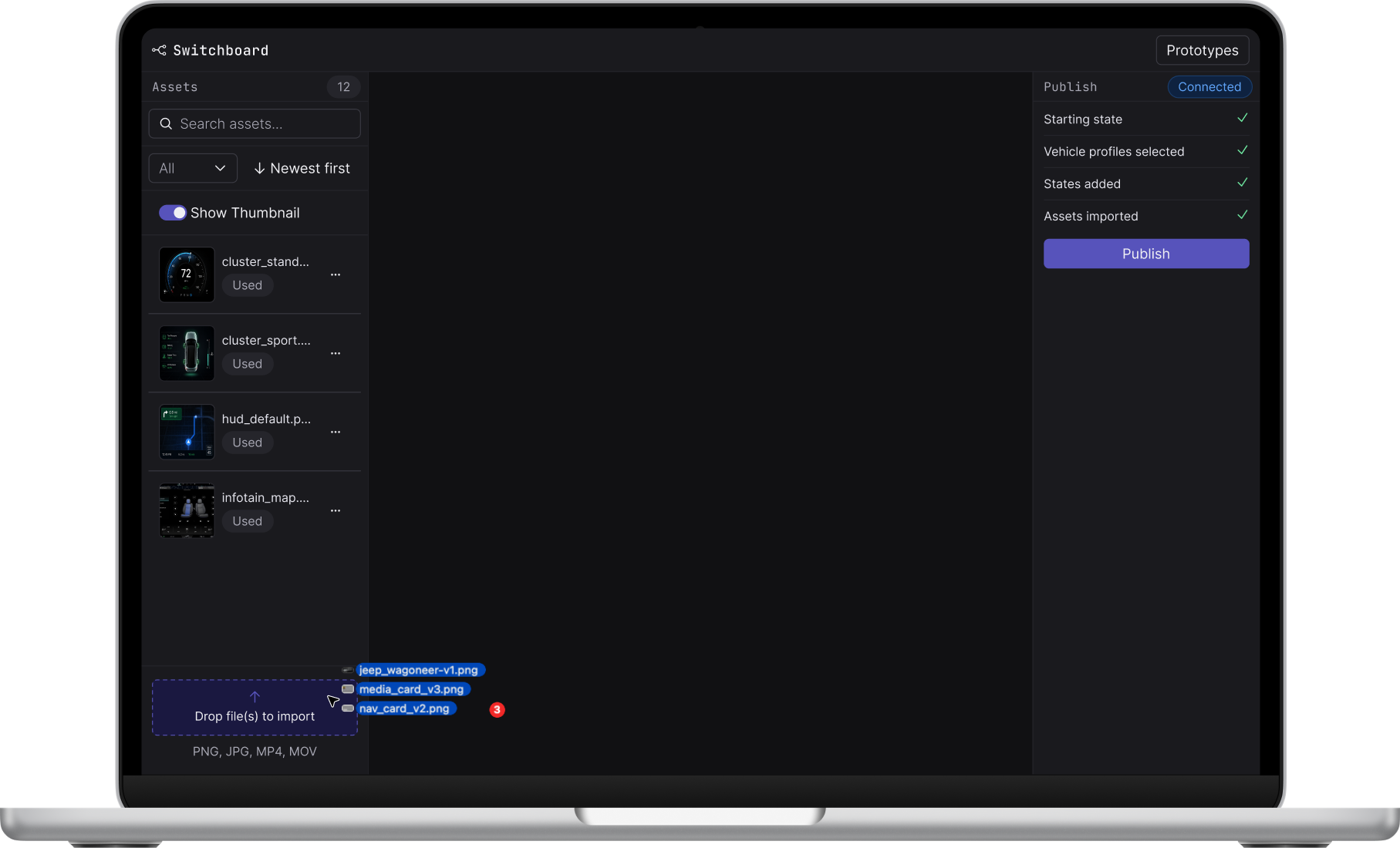
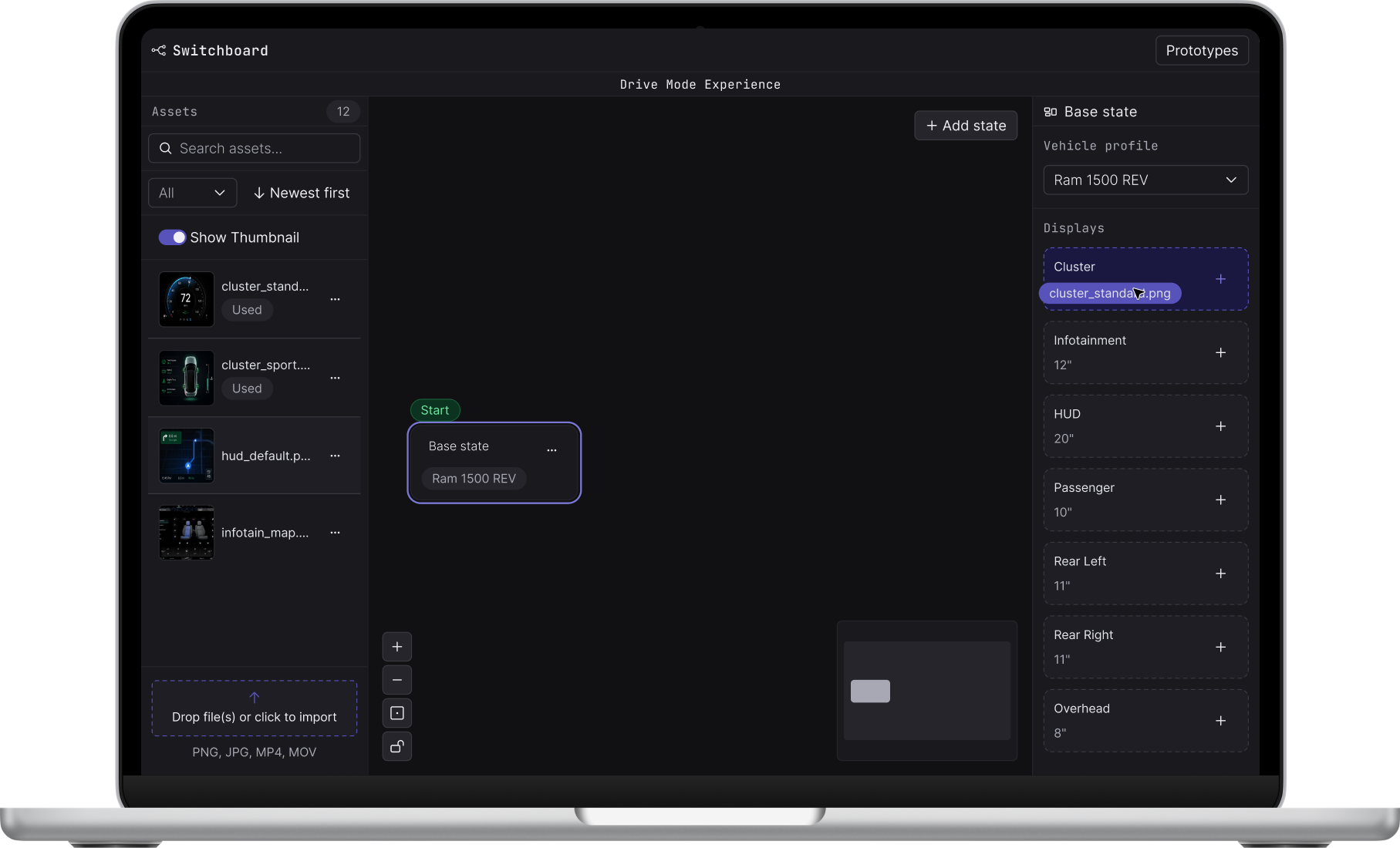
A web editor where designers import assets from tools they already know, assign them to displays defined by a vehicle profile, and wire states together with triggers. Touch, keyboard, eye gaze, timers, and compound logic, authored in plain language with zero scripting. The editor is the preview. Publish sends it to the BuC, a VR twin, or a laptop, all from one cloud configuration.